
Unveiling the World of Calcium Carbonate: Applications, Pricing, and Quality Insights
Back to list
Calcium carbonate, with the chemical formula CaCO₃, is a chemical compound that holds significant importance across a wide array of industries. From its use in manufacturing various products to its role in health and environmental applications, understanding different aspects such as calcium carbonate price per kg, calcium carbonate plant, nano calcium carbonate powder price for sealants, calcium carbonate 98% purity, and its application in soap-making can open doors to informed decision - making for businesses and consumers alike.
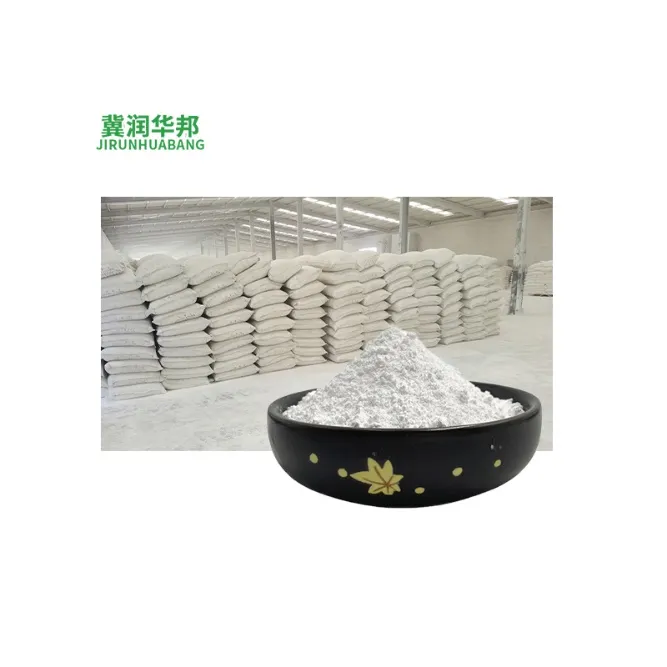
Calcium Carbonate Price per kg: A Price Spectrum Based on Grade and Use
The calcium carbonate price per kg can vary widely depending on multiple factors. For industrial - grade calcium carbonate, which is often used in large - scale applications like construction and basic plastic manufacturing, the price can range from as low as $0.80 to $2.80 per kg. These lower - cost options are typically of a coarser particle size and may have a slightly lower purity, but they are more than sufficient for applications where high precision is not required.
Food - grade calcium carbonate, on the other hand, which needs to meet strict safety and purity standards for use in products like fortified foods and antacids, can cost between $0.80 and $1.50 per kg. The higher price is a result of the more rigorous production processes and quality control measures. Pharmaceutical - grade calcium carbonate, with even stricter purity and quality requirements, can command prices upwards of $1.50 per kg.
When it comes to specialized forms such as nano calcium carbonate powder, the price per kg is generally higher. Nano - sized particles are engineered for specific high - performance applications. For example, in the production of high - end adhesives and sealants, nano calcium carbonate powder prices can range from $1.50 to $4.00 per kg. The small particle size, uniform particle size distribution, and large surface area of nano calcium carbonate contribute to its enhanced performance in these applications, justifying the higher cost.
Calcium Carbonate Plant: The Heart of Production
Calcium carbonate plants are where this versatile compound is produced. These plants can have different production methods depending on the type of calcium carbonate they aim to produce. For ground calcium carbonate (GCC), which is often used in bulk applications, the process typically starts with mining high - quality limestone or marble. The raw materials are then crushed, ground, and sometimes further processed to achieve the desired particle size and purity.
For precipitated calcium carbonate (PCC), the production process is more complex. It involves chemical reactions. Limestone is first burned to produce calcium oxide (quicklime), which is then slaked with water to form calcium hydroxide (slaked lime). The slaked lime is then carbonated with carbon dioxide to precipitate calcium carbonate. This synthetic process allows for more control over the particle size, shape, and purity of the final product.
Plants producing calcium carbonate 98% purity need to have advanced purification systems in place. Whether it's for industrial applications where high - purity calcium carbonate is used in electronics or for food and pharmaceutical uses, the purification process may involve multiple filtration steps, chemical treatments to remove impurities, and strict quality control checks at every stage of production.
Nano Calcium Carbonate Powder Price for Sealants: A Premium Product for High - Performance Applications
Nano calcium carbonate powder has found a niche in the sealant industry due to its unique properties. In sealants, especially those used in high - end construction, automotive, and aerospace applications, the performance requirements are stringent. Nano calcium carbonate powder with its small particle size can enhance the mechanical properties of sealants. It can improve the tensile strength, elongation at break, and adhesion properties of the sealant.
The price of nano calcium carbonate powder for sealants, as mentioned earlier, can be relatively high. A well - processed and surface - treated nano calcium carbonate powder suitable for sealants can cost around $2.00 - $4.00 per kg. The surface treatment is crucial as it helps the nano - particles to disperse better in the sealant matrix, ensuring uniform performance. The high loading levels of nano calcium carbonate in sealants can also reduce the overall production cost of the sealant while improving its performance, making it a cost - effective choice in the long run for manufacturers who demand high - quality products.
Calcium Carbonate 98%: Meeting High - Purity Demands
Calcium carbonate 98% purity is highly sought after in many industries. In the food industry, it can be used as a calcium fortifier in products like dairy alternatives, cereals, and juices. Its high purity ensures that there are no harmful contaminants, making it safe for human consumption. In the pharmaceutical industry, 98% pure calcium carbonate can be an ingredient in antacid tablets or calcium supplements.
In industrial applications, high - purity calcium carbonate is used in the production of specialty papers, where it can improve the brightness, opacity, and smoothness of the paper. It is also used in the manufacturing of high - end plastics, where impurities can affect the physical and mechanical properties of the final product. The production of calcium carbonate 98% purity requires careful selection of raw materials, advanced processing techniques, and strict quality control. Manufacturers often use high - grade limestone or marble as the starting material and employ multiple purification steps to achieve the desired purity level.
Calcium Carbonate for Soap: A Natural Ingredient with Benefits
Calcium carbonate has found its way into soap - making as a beneficial ingredient. In soap formulations, calcium carbonate can act as an abrasive agent. It helps to gently exfoliate the skin, removing dead skin cells and leaving the skin feeling smoother. Additionally, it can contribute to the texture of the soap, making it firmer and more durable.
Calcium carbonate used in soap - making is usually of a fine particle size to ensure that it does not cause any discomfort during use. It is often sourced from natural deposits and processed to meet the quality requirements for cosmetic applications. Since it is a natural ingredient, it is appealing to consumers who prefer products with natural components. The use of calcium carbonate in soap also helps in reducing the overall cost of production while adding value to the product in terms of functionality.
Calcium Carbonate FAQs
How does the purity of calcium carbonate affect its price perkg?
Higher purity calcium carbonate, such as calcium carbonate 98%, generally commands a higher price per kg. This is because achieving higher purity requires more advanced production techniques, better - quality raw materials, and more stringent quality control. In industries like food and pharmaceuticals, high purity is non - negotiable for safety reasons, so the cost of ensuring that level of purity is reflected in the price.
What makes nano calcium carbonate powder more expensive for sealants?
Nano calcium carbonate powder for sealants is more expensive due to its specialized production process. The small particle size and uniform distribution of nano - particles are difficult to achieve and require advanced equipment and techniques. Surface treatment, which is often necessary for better dispersion in sealants, also adds to the cost. Additionally, its unique properties that enhance the performance of sealants, such as improved mechanical properties and better adhesion, justify the higher price.