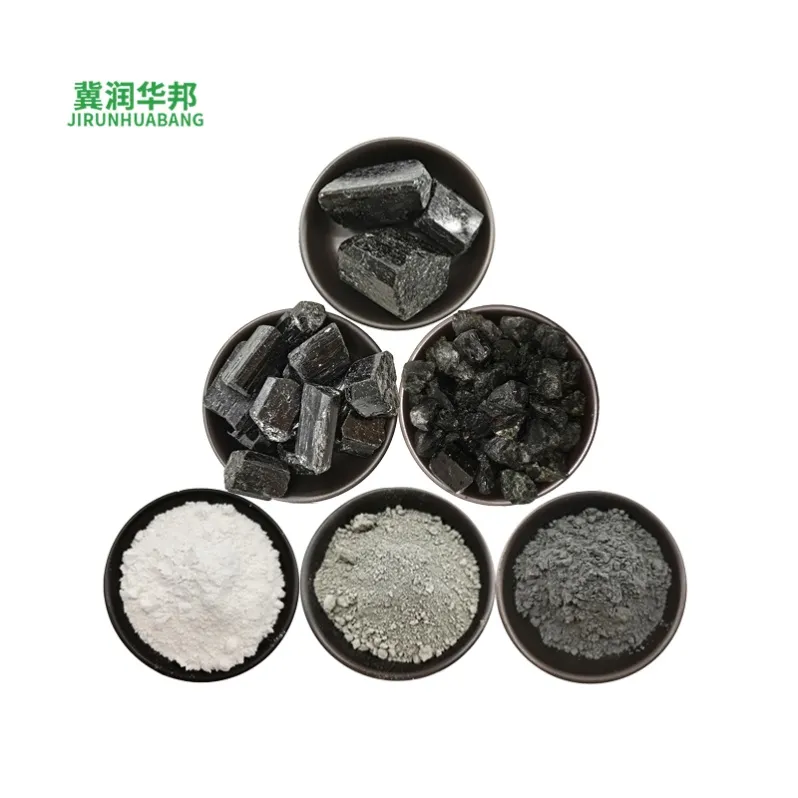
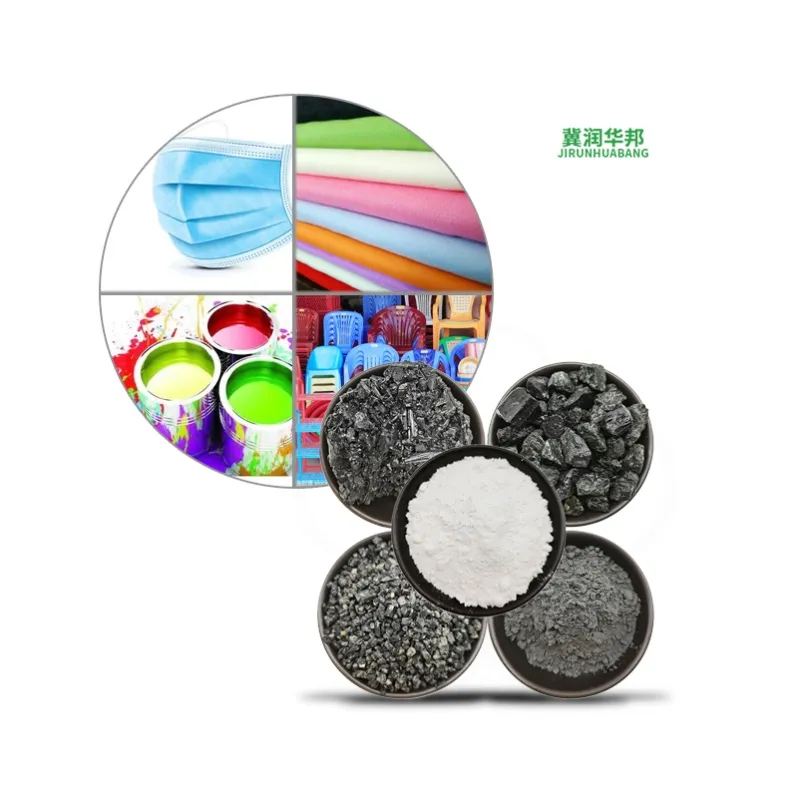
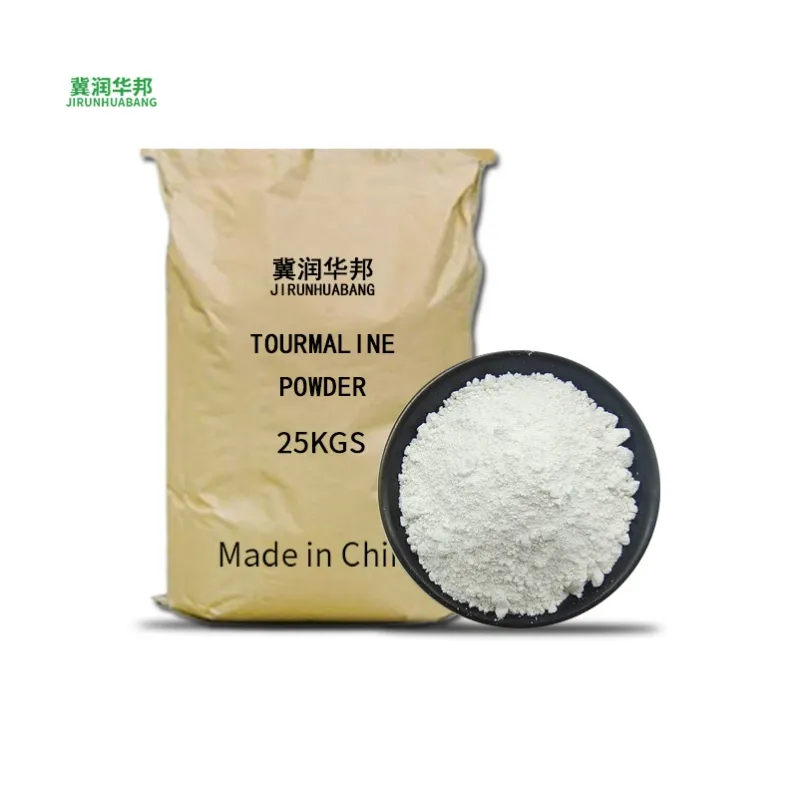
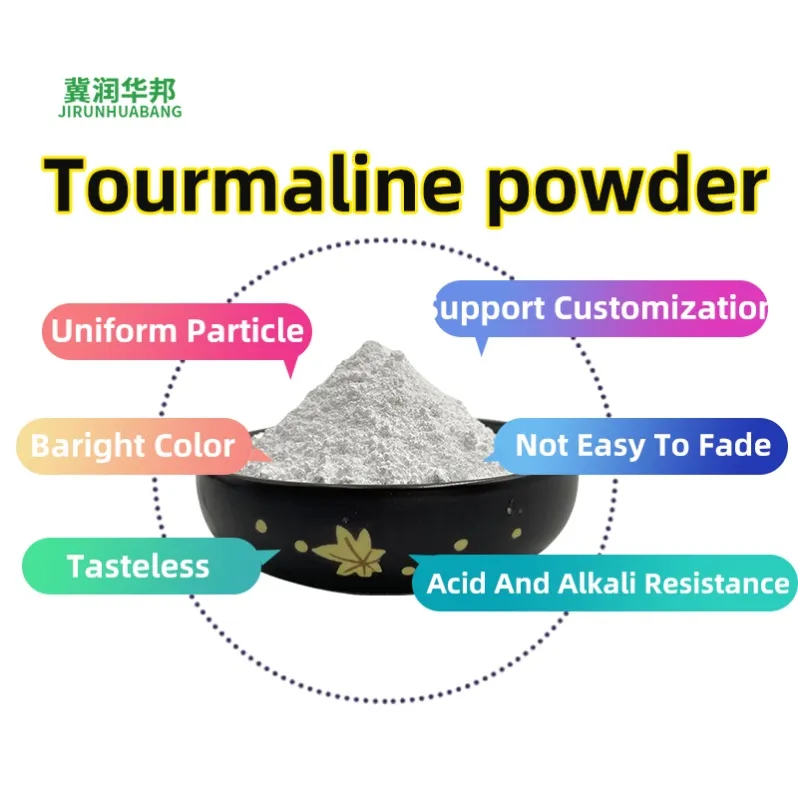
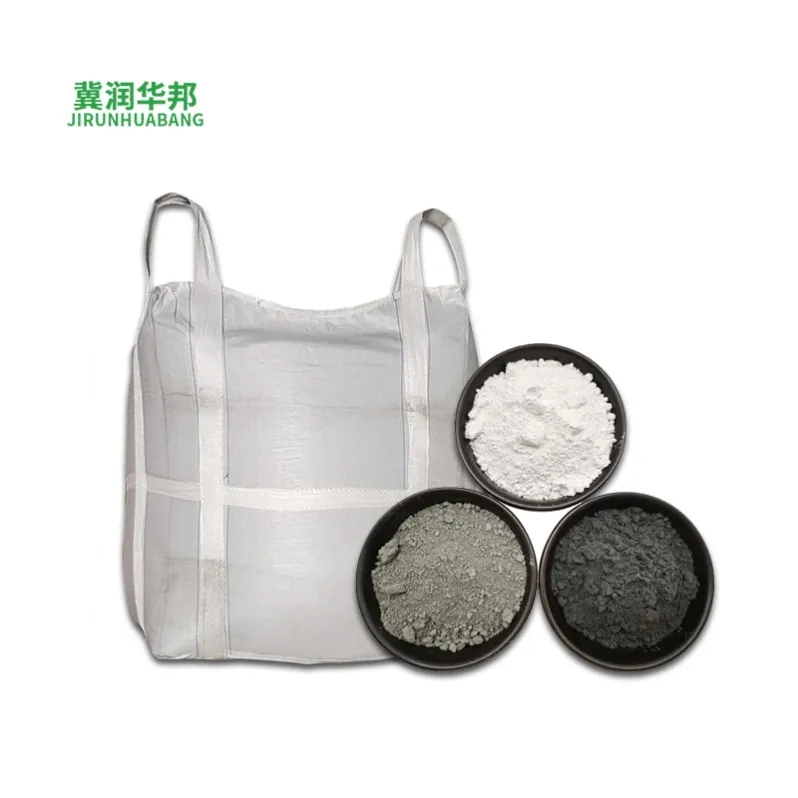
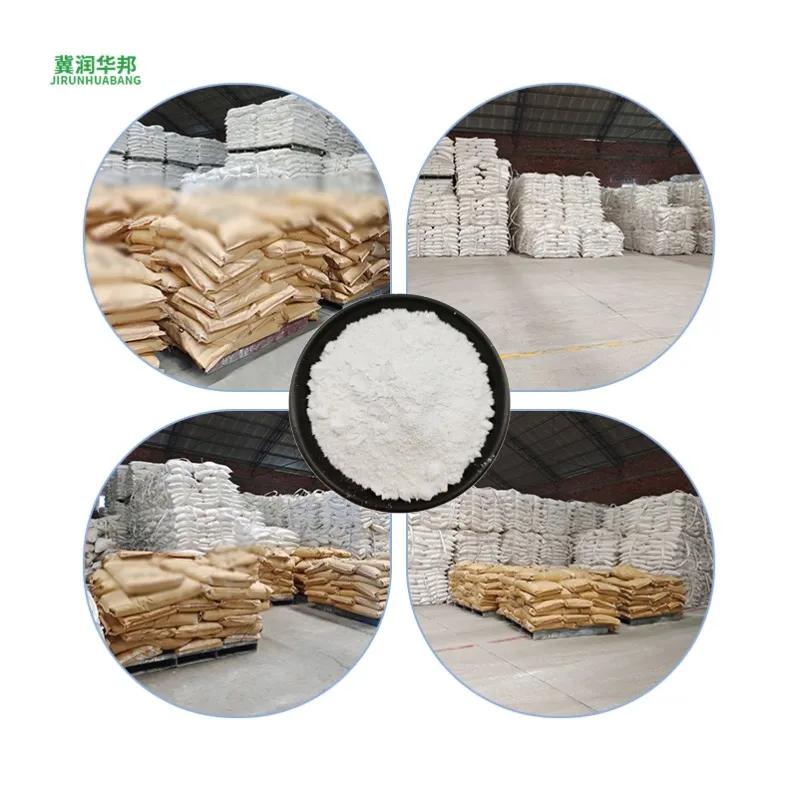
The industrial value of tourmaline powder stems from its key properties, including charge-generating capability, abrasion resistance, chemical stability, thermal endurance, and adsorption efficiency. Charge-generating capability, rooted in its piezoelectric and thermoelectric properties, allows tourmaline powder to produce microelectrical charges when exposed to mechanical stress or temperature variations— a trait useful for static control and microfield activation. Abrasion resistance makes tourmaline powder ideal for strengthening materials prone to wear, while chemical stability ensures it remains inert in contact with most industrial chemicals, preventing unwanted reactions. Thermal endurance enables it to retain properties in high-temperature manufacturing processes, and strong adsorption efficiency makes it effective for capturing contaminants. These combined attributes position tourmaline powder as a versatile additive that enhances product performance and reduces production costs.
Plastic modification is a major application of tourmaline powder, where it enhances the mechanical and functional properties of plastic products. When integrated into plastic formulations, tourmaline powder improves tensile strength, flexural strength, and impact resistance, while reducing shrinkage and improving dimensional stability during processing and use. Microfine tourmaline powder ensures uniform dispersion within plastic matrices, avoiding agglomeration that can compromise product quality. Surface-functionalized tourmaline powder, treated with specialized modifiers, forms stronger bonds with plastic polymers, boosting durability and resistance to environmental factors like moisture and heat. This makes tourmaline powder a cost-effective solution for modifying plastics used in industrial components, packaging materials, and consumer goods, helping manufacturers upgrade product quality without excessive cost.
Rubber strengthening is another key use case for tourmaline powder, where it enhances the durability and performance of rubber compounds. Adding tourmaline powder to rubber formulations improves tensile strength, tear resistance, and abrasion resistance, making rubber products more resilient to repeated use and harsh conditions. Its charge-generating property also helps reduce static buildup on rubber surfaces, making it suitable for rubber products used in electronic or explosive environments. Tourmaline powder also improves the heat aging resistance of rubber, extending service life in high-temperature applications. Common applications include industrial rubber seals, conveyor belts, automotive rubber parts, and vibration-damping components, where strength and reliability are non-negotiable. By using tourmaline powder, rubber manufacturers can produce high-performance products that meet industry standards while controlling production expenses.
In industrial coatings, tourmaline powder acts as a functional additive that upgrades coating performance and adds value. It improves coating opacity, leveling, and adhesion to various substrates, ensuring a smooth, uniform finish that resists peeling and chipping. Tourmaline powder enhances the scratch resistance and wear resistance of coatings, extending the service life of coated surfaces in industrial settings. Its thermal endurance makes it suitable for high-temperature coatings used on industrial equipment, furnaces, and pipes, while its chemical stability ensures compatibility with other coating ingredients. Additionally, the charge-generating property of tourmaline powder helps reduce static buildup on coated surfaces, making it useful for coatings applied to electronic devices or static-sensitive equipment. These benefits make tourmaline powder a valuable addition to industrial coatings, architectural paints, and specialty protective coatings.
Industrial wastewater treatment is an increasingly important application of tourmaline powder, leveraging its adsorption efficiency and charge-generating capability to purify contaminated water. Tourmaline powder effectively adsorbs heavy metal ions, organic pollutants, and suspended particles from industrial wastewater, reducing contamination levels and helping industries meet discharge standards. Its charge-generating property activates water molecules, enhancing the breakdown of organic contaminants and boosting purification efficiency. Tourmaline powder can be used as a filter medium in wastewater treatment systems or mixed directly into wastewater as a purification agent, making it a flexible and cost-effective solution. This application is particularly relevant for manufacturing, mining, and chemical industries, where wastewater treatment is a critical environmental compliance requirement.
Tourmaline powder also finds utility in adhesive and sealant formulations, improving bonding performance and long-term stability. When added to adhesives, it enhances bonding strength to metals, plastics, and ceramics, while boosting heat resistance and chemical resistance. Tourmaline powder improves the viscosity and thixotropy of adhesives, ensuring better application properties and reducing sagging during curing. In sealants, it enhances flexibility and wear resistance, extending service life in harsh industrial environments. This makes tourmaline powder suitable for industrial adhesives used in construction, automotive assembly, and high-temperature applications, as well as sealants for pipes, joints, and industrial equipment.
Other industrial applications of tourmaline powder include its use in friction materials and dielectric components. In friction materials like brake pads and clutch plates, tourmaline powder improves wear resistance, reduces noise, and enhances friction performance, ensuring reliable braking and transmission. In dielectric components, ultra-fine tourmaline powder improves insulation properties and charge storage capability, making it suitable for capacitors and other electronic components. These diverse applications highlight the adaptability of tourmaline powder and its role in supporting innovation across multiple industrial sectors.
Global tourmaline ore resources ensure a steady supply of tourmaline powder for industrial demand, with major production regions investing in advanced processing technologies. Innovations in grinding and surface functionalization have expanded the range of tourmaline powder products, enabling customization for specific industrial needs. Manufacturers focus on consistent quality control to ensure uniform particle size, purity, and performance, making tourmaline powder a reliable material for industrial use. As industrial technologies evolve, new processing methods continue to unlock additional potential for tourmaline powder, expanding its application scope.
The versatility and functional value of tourmaline powder drive sustained demand across industrial manufacturing sectors. Its ability to enhance product strength, durability, and functionality, while reducing production costs, makes it an indispensable material in plastic modification, rubber strengthening, coatings, wastewater treatment, and beyond. Unlike restricted sectors, tourmaline powder’s industrial applications focus on improving manufacturing efficiency and product performance, aligning with global industrial development trends. With ongoing advancements in processing technology and product customization, tourmaline powder is set to play an even more important role in industrial innovation, supporting the development of high-performance, durable products for years to come.
Charge-generating capability, from piezoelectric and thermoelectric effects, is a defining feature of tourmaline powder, enabling static control and microfield activation. Abrasion resistance and chemical stability make it a reliable reinforcing agent and additive, while thermal endurance ensures performance in high-temperature processes. Adsorption efficiency supports purification applications, making tourmaline powder a multifunctional material that adds value across diverse industrial manufacturing sectors.
Plastic modification is a primary application, with tourmaline powder boosting mechanical strength, reducing shrinkage, and improving dimensional stability of plastic products. Microfine and surface-functionalized variants ensure uniform dispersion and strong polymer bonding, reducing production costs while upgrading product quality. This makes it suitable for industrial plastics, packaging, and consumer goods, helping manufacturers enhance competitiveness without excessive expense.
In rubber strengthening, tourmaline powder improves tensile strength, tear resistance, and abrasion resistance of rubber compounds. It reduces static buildup and enhances heat aging resistance, extending service life of rubber products like seals, conveyor belts, and automotive parts. This application helps rubber manufacturers produce durable, high-performance products at lower costs.
As a coating additive, tourmaline powder improves opacity, adhesion, and scratch resistance, enhancing coating durability and static control. It is suitable for industrial coatings, architectural paints, and high-temperature protective coatings, ensuring long-lasting performance in harsh environments.
Industrial wastewater treatment leverages tourmaline powder’s adsorption efficiency and charge-generating capability to remove heavy metals, organic pollutants, and suspended particles. It activates water molecules to boost purification, offering a cost-effective solution for environmental compliance in manufacturing, mining, and chemical industries.
Tourmaline powder enhances adhesives and sealants by improving bonding strength, heat resistance, and flexibility. It is used in industrial adhesives for construction and automotive applications, as well as sealants for industrial equipment, ensuring reliable performance and long-term stability.
Additional applications include friction materials, where it improves wear resistance and friction performance, and dielectric components, where ultra-fine tourmaline powder enhances insulation and charge storage. Global tourmaline reserves ensure stable supply, with advanced processing technologies enabling customized tourmaline powder products for specific industrial needs.