Product Model:

Runhuabang kaolin powder for thermal stability for ceramic formulation paper coating plastic filler rubber reinforcement paint additive and industrial binder

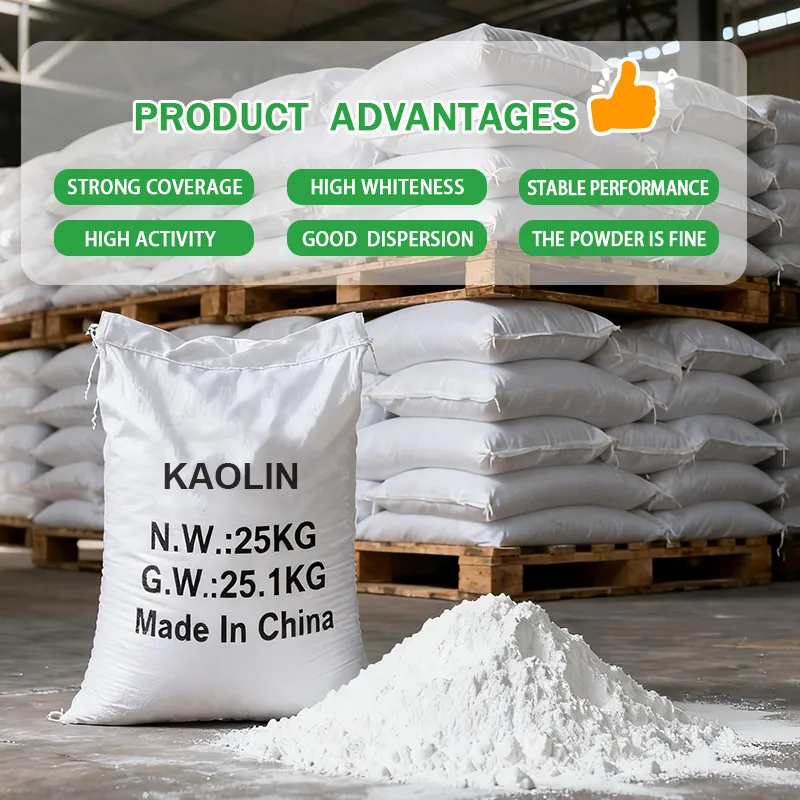
Kaolin powder is a naturally occurring non-metallic mineral powder, mainly composed of kaolinite—a soft, layered silicate mineral formed by long-term geological processes including weathering of aluminosilicate rocks, hydrothermal alteration, and metamorphic change. This mineral powder has become an indispensable material in industrial manufacturing due to its unique combination of physical and chemical properties, which allow it to adapt to a wide range of production needs. Unlike materials associated with restricted industries, kaolin powder focuses on enhancing product performance, optimizing production processes, and reducing manufacturing costs, making it a core component in modern industrial supply chains.


Product Description
 

In the realm of cement concrete, super - fine active metakaolin stands out as a high - performance supplementary cementitious material. Its extremely fine particle size and high pozzolanic reactivity enable it to react with calcium hydroxide released during cement hydration. This reaction forms additional calcium silicate hydrate (C - S - H) gels, enhancing the concrete's density, strength, and durability. It also improves resistance to chemical attacks and reduces permeability, making it ideal for high - strength and long - lasting construction projects.

Washed kaolin is a cornerstone in the paper industry. After a thorough washing process to remove impurities, it offers excellent opacity, brightness, and printability. As a filler and coating pigment, it enhances the paper's surface smoothness, allowing for sharp and high - quality printing results.

Calcined kaolin is a key ingredient in ceramics. The calcination process alters its structure, increasing its whiteness and improving its thermal stability. It is used to adjust the firing temperature and shrinkage rate of ceramic bodies, ensuring consistent and high - quality ceramic products with fine textures and appealing finishes.

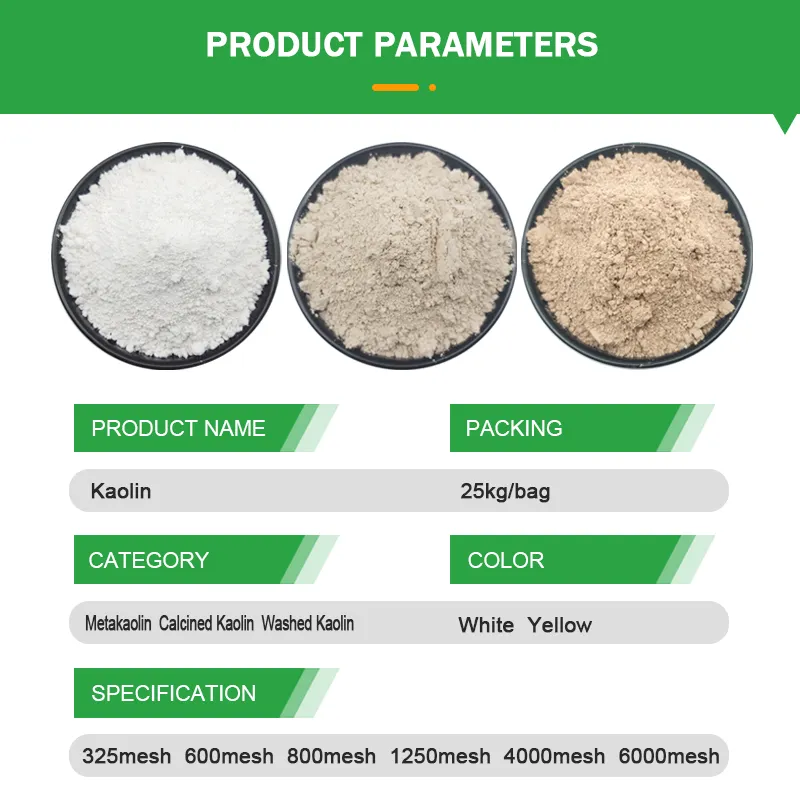
Product Parameters


Cas No. 1332-58-7
Place of Origin China
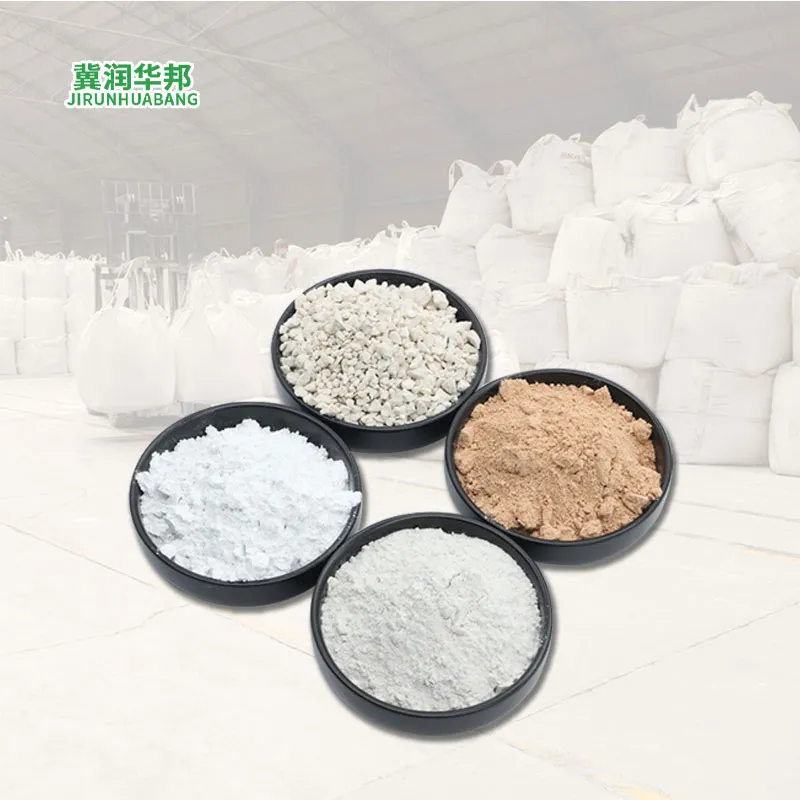
Color White/Yellow
Shape Powder
Purity 90-97%
Grade cosmetics grade/industrial Grade
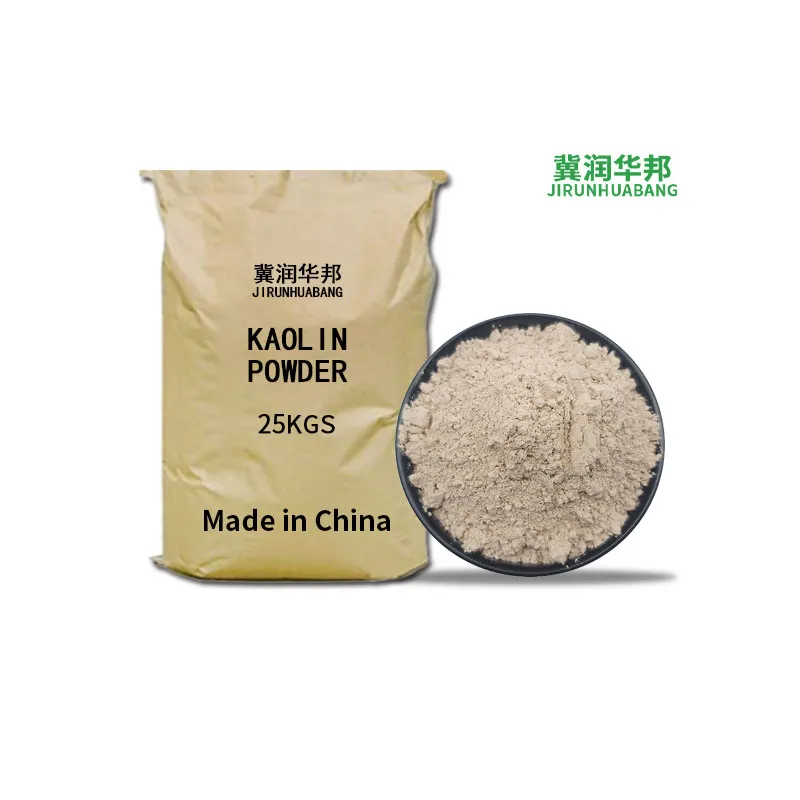
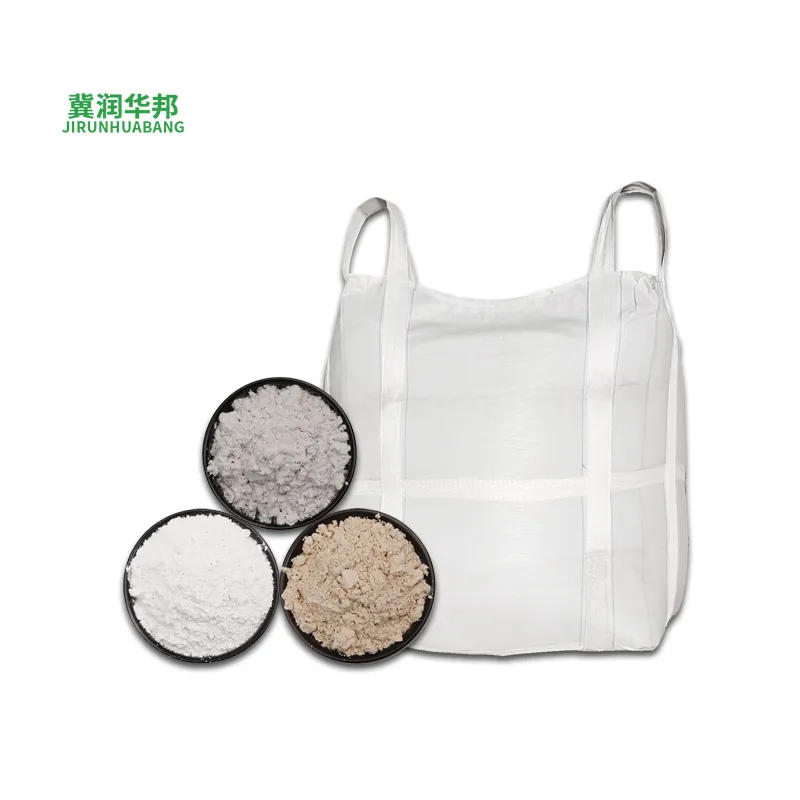
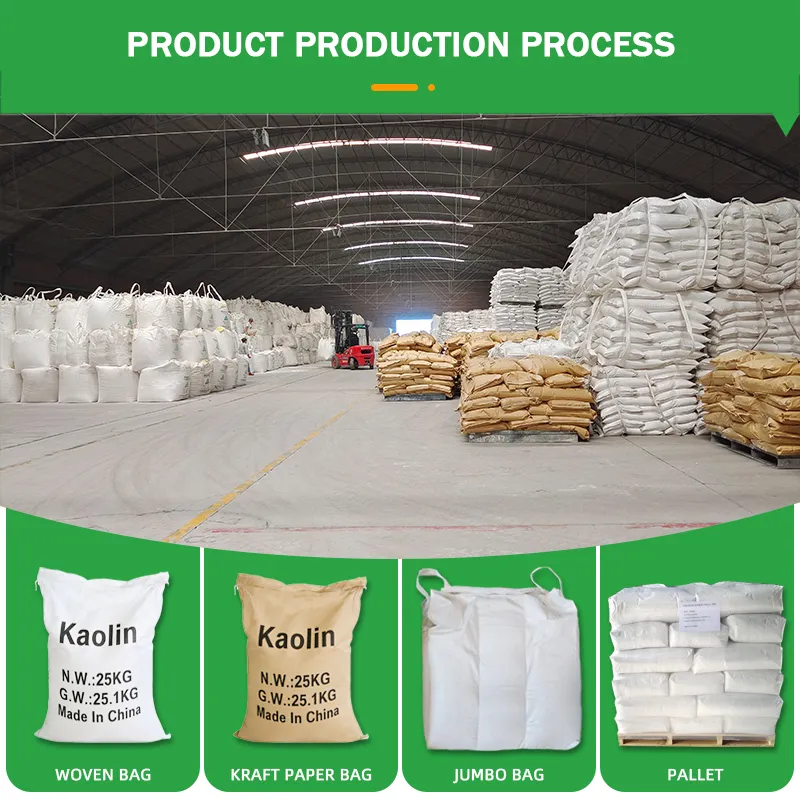
Package 5-25kg/bag,customized package
MOQ 1kg
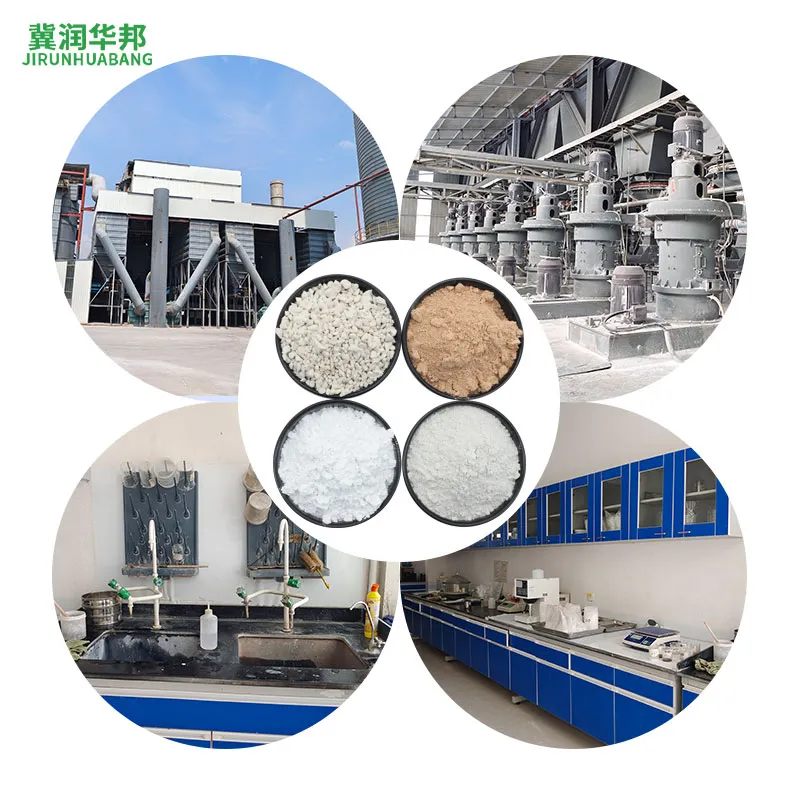
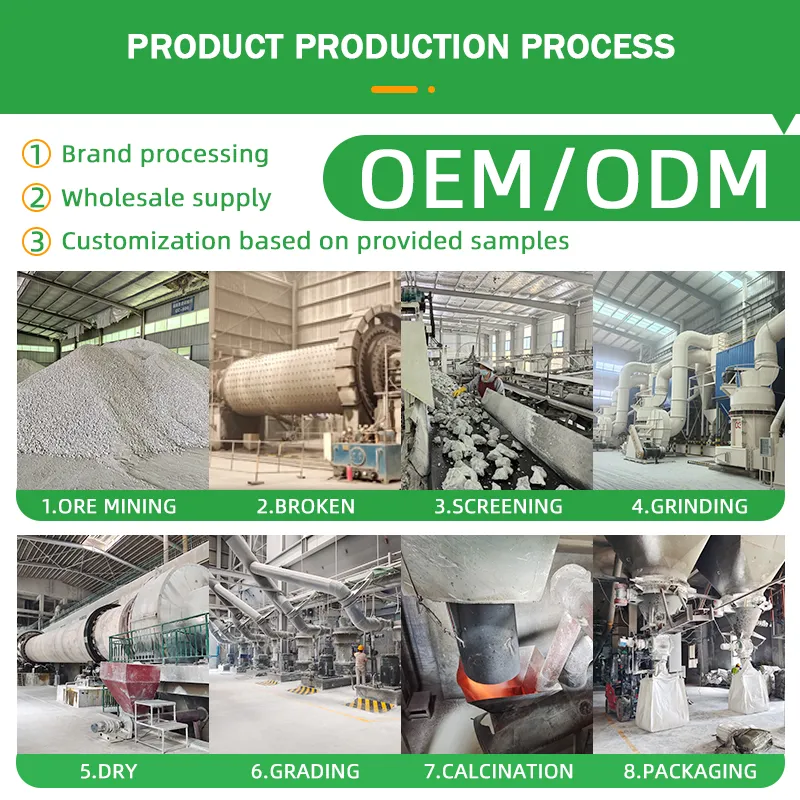
Production of kaolin powder involves a series of careful and sequential processing steps, each designed to refine its properties and prepare it for specific industrial uses. Process starts with mining raw kaolin ore, which is typically extracted through open-pit mining methods to ensure easy access and minimize disruption to surrounding environment. Once mined, raw ore is transported to processing facilities, where it is first crushed into coarse particles to facilitate subsequent purification and grinding steps. Impurities such as quartz, feldspar, and iron-based compounds are then removed through physical separation techniques, including gravity separation, magnetic separation, and froth flotation. These purification steps are crucial, as even trace amounts of impurities can compromise key properties of kaolin powder—especially in high-end applications like precision paper coating and advanced ceramic formulation, where consistency and quality are essential.
After purification, kaolin is ground into fine particles using specialized equipment such as ball mills, roller mills, and jet mills. Choice of grinding equipment depends on desired particle size, which can range from microfine to ultrafine. Jet mills are often preferred for producing ultrafine kaolin powder, as they deliver uniform particle distribution ideal for high-precision applications. Depending on intended use, additional processing steps such as calcination or surface modification may be added to further enhance functional properties of kaolin powder. Calcination involves heating purified kaolin powder at elevated temperatures to remove moisture, organic matter, and volatile impurities. This thermal treatment not only boosts whiteness and hardness of kaolin powder but also improves its thermal stability and chemical inertness, making calcined kaolin powder well-suited for high-temperature applications and harsh industrial environments.
Read More About uses of kaolin clay for skin
Read More About kaolin clay for skin whitening
Read More About kaolin clay for skin benefits
Surface modification of kaolin powder involves treating its surface with coupling agents or other modifiers to improve compatibility with other materials such as plastics, rubber, and paints. Common coupling agents used for this purpose include silane and titanate modifiers, which form strong bond between kaolin powder and host material. This treatment enhances dispersion of kaolin powder within host material, preventing particle agglomeration and ensuring that its reinforcing or functional effects are fully realized. Surface-modified kaolin powder also improves overall durability and performance of final product, making it more resistant to environmental factors like moisture, heat, and chemical exposure.
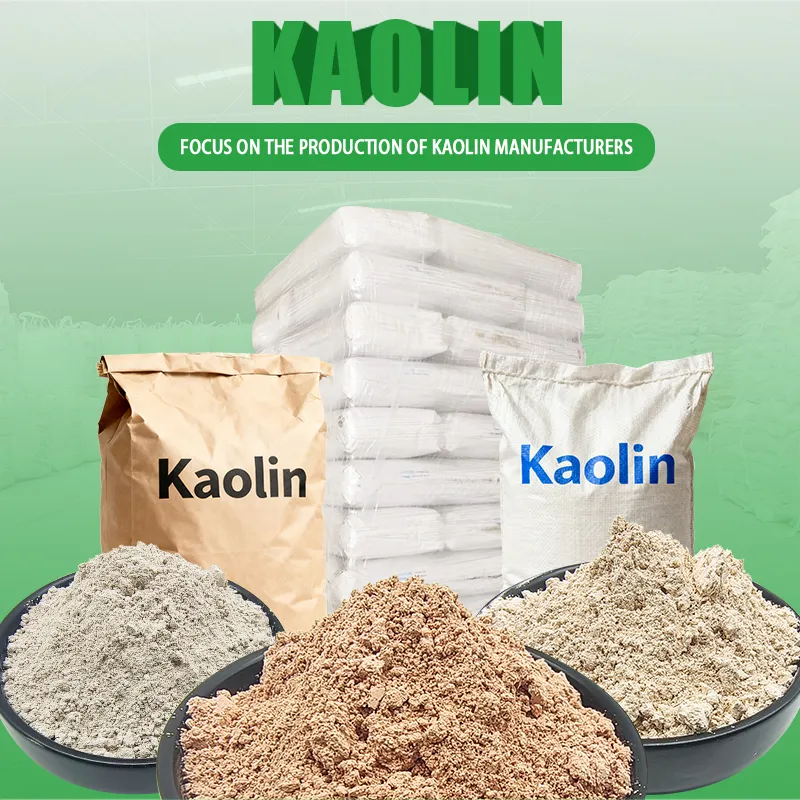
There are several distinct types of kaolin powder, each engineered to meet unique requirements of different industrial sectors. Natural kaolin powder, with its inherent whiteness and plasticity, is commonly used in traditional applications such as ceramic formulation and paper production. It requires minimal processing, making it cost-effective option for manufacturers producing standard, everyday products. Calcined kaolin powder, with its enhanced properties, is reserved for high-performance applications including advanced ceramics, industrial coatings, and plastic composites. Its improved hardness and thermal stability make it ideal for use in environments where durability and resistance to high temperatures are non-negotiable.
Surface-modified kaolin powder is specifically designed for use in polymers, rubber, and adhesives, where compatibility and dispersion are critical factors. This type of kaolin powder forms strong bonds with polymer matrices, significantly enhancing mechanical properties of final composite material. Ultrafine kaolin powder, with its extremely small particle size, is used in high-end applications such as precision coatings, electronic components, and specialty papers. Its fine particle size ensures smooth finish and uniform dispersion, making it perfect for applications that demand high precision and consistency. Each type of kaolin powder undergoes rigorous testing to ensure it meets specific standards of its intended application—from particle size distribution to chemical composition—guaranteeing reliability and performance.
Read More About uses of kaolin clay for skin
Read More About kaolin clay for skin whitening
Industrial value of kaolin powder stems from its core properties, which include whiteness, plasticity, chemical inertness, thermal stability, low oil absorption, and good dispersibility. Whiteness is one of most sought-after properties of kaolin powder, as it eliminates need for large quantities of expensive pigments in applications that require bright, uniform finishes. Natural kaolin powder has inherent whiteness, which can be further enhanced through purification and bleaching processes to meet strict standards of high-end industries such as paper coating and paint manufacturing. Whiteness of kaolin powder is measured using standard color scales, and higher whiteness values are in high demand for premium applications where appearance is critical.
Plasticity is another essential property of kaolin powder, allowing it to be easily shaped and molded when mixed with water. This property is result of layered structure of kaolinite, which enables particles to slide past each other when wet, forming cohesive, malleable paste. This makes kaolin powder ideal for ceramic formulation, where it can be shaped into intricate designs and maintains its form during drying and firing. Ceramic manufacturers often mix kaolin powder with other materials such as feldspar and quartz to adjust plasticity and firing properties of clay body, ensuring final product meets their specific requirements. Plasticity of kaolin powder also makes it useful in production of clay-based adhesives and sealants, where it provides flexibility and strong bonding strength.
Chemical inertness is another key property of kaolin powder, meaning it does not easily react with other substances. This makes it safe and reliable additive in various manufacturing processes, even in harsh industrial environments where it may be exposed to chemicals, moisture, or high temperatures. For example, kaolin powder used in industrial coatings must resist chemical attack from industrial fluids and environmental pollutants—a property made possible by its chemical inertness. Thermal stability further extends utility of kaolin powder, allowing it to retain its properties during high-temperature processing steps such as ceramic firing or plastic molding. Kaolin powder can withstand temperatures well above those encountered in most industrial processes, making it suitable for use in high-heat applications like refractory materials and industrial coatings.
Low oil absorption is another beneficial property of kaolin powder, making it ideal filler in paints, coatings, and plastics. Low oil absorption means that less binder or resin is needed to wet kaolin powder, reducing production costs while maintaining desired properties of final product. This is particularly important in paint and coating industry, where binders are often most expensive component of formulation. Good dispersibility ensures that kaolin powder can be evenly distributed within host materials, preventing particle agglomeration and ensuring consistent performance across entire product. Agglomeration can lead to uneven performance—such as poor opacity in paints or reduced strength in plastics—so good dispersibility is essential for maximizing effectiveness of kaolin powder.
Read More About kaolin clay for skin benefits
Read More About kaolin clay for skin
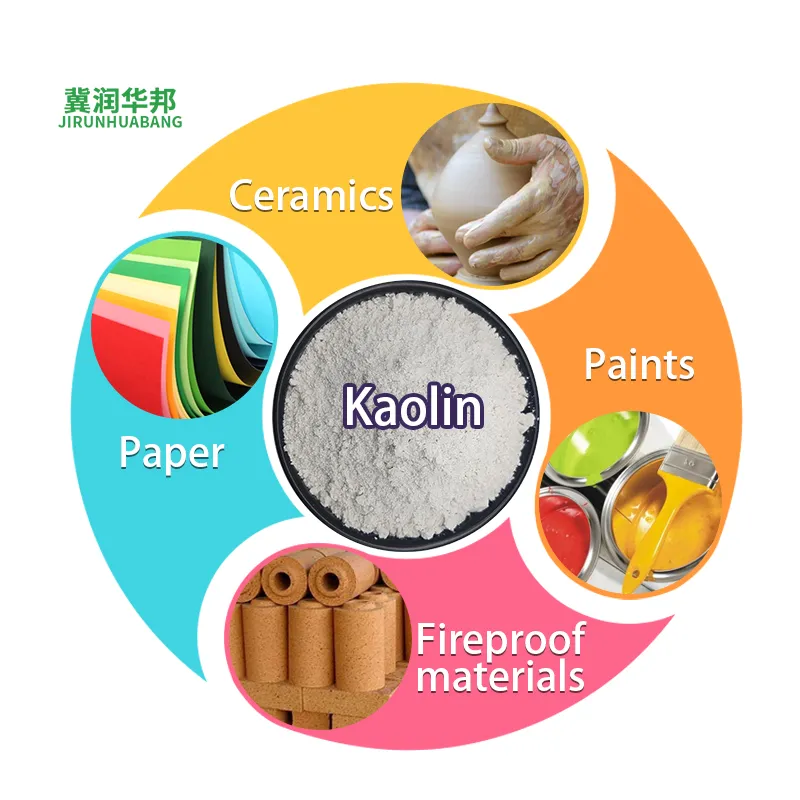
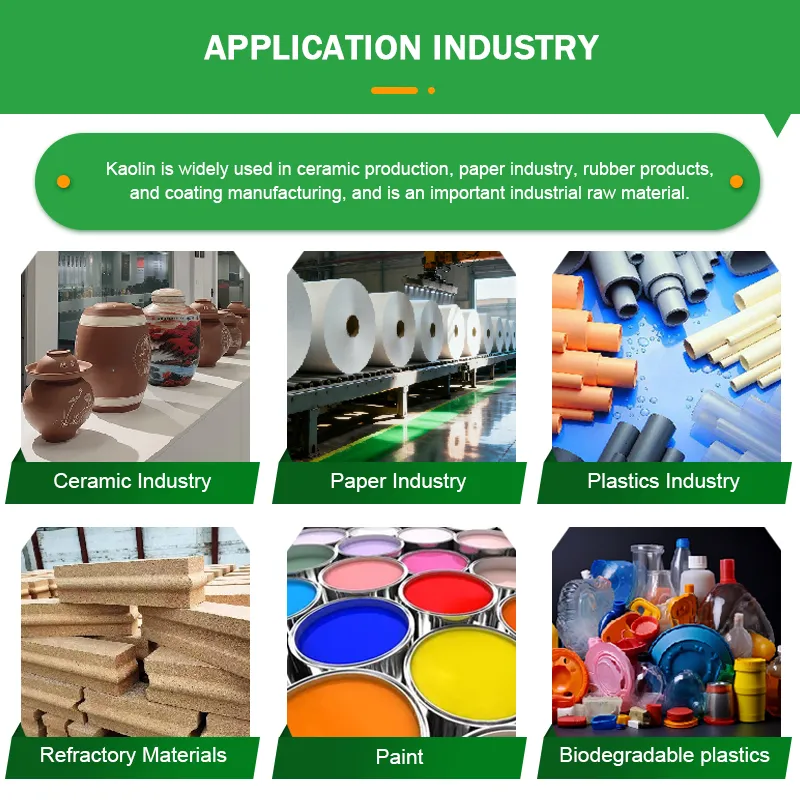
Ceramic formulation is one of oldest and most important applications of kaolin powder, serving as key raw material in both traditional and advanced ceramic manufacturing. Kaolin powder’s plasticity is essential for shaping ceramic products, from everyday items like pottery and tableware to high-performance industrial ceramics. When mixed with water, kaolin powder forms smooth, malleable paste that can be shaped by hand, cast in molds, or extruded into various forms. During drying, kaolin powder retains its shape, and during firing, it undergoes series of chemical and physical changes that transform it into hard, durable ceramic material. Firing temperatures vary depending on type of ceramic product, with traditional pottery fired at lower temperatures and advanced ceramics fired at extremely high temperatures to achieve enhanced strength and durability.
Kaolin powder also acts as flux in ceramic formulations, helping to lower firing temperature and reduce energy consumption—making it essential component in ceramic production, both for its functional properties and cost-saving benefits. Calcined kaolin powder is particularly valuable in advanced ceramic applications, where high strength, heat resistance, and chemical stability are required. It is used in production of ceramic tiles, sanitary ware, refractory materials, and electronic ceramics. Ceramic tiles made with calcined kaolin powder are more durable and resistant to wear, making them suitable for high-traffic areas such as commercial buildings and homes. Sanitary ware—such as toilets and sinks—benefits from high whiteness and durability of calcined kaolin powder, ensuring long-lasting, aesthetically pleasing finish that resists stains and damage.
In refractory materials, kaolin powder’s thermal stability allows it to withstand extremely high temperatures, making it suitable for use in furnaces, kilns, and other high-heat industrial equipment. Refractory bricks and castables containing calcined kaolin powder are used in steel production, glass manufacturing, and other high-temperature industrial processes, where they protect equipment from heat damage and ensure consistent performance. In electronic ceramics, kaolin powder is used to produce components such as insulators, capacitors, and semiconductors, where its chemical inertness and electrical properties are critical. These electronic components require high precision and reliability, and kaolin powder provides necessary properties to meet these stringent requirements.
Paper industry is another major consumer of kaolin powder, accounting for significant portion of global kaolin demand. Kaolin powder is used in two main ways in paper production: as filler and as coating material. As filler, kaolin powder is added to paper pulp to fill gaps between paper fibers, improving paper’s opacity, smoothness, and printability. Opacity is particularly important for printing papers, as it prevents ink from showing through to other side of paper, ensuring clear, legible prints. Smoothness improves feel of paper and enhances print quality, while printability ensures that ink adheres evenly to paper surface, preventing smudging and blurring.
Adding kaolin powder as filler also enhances paper’s tensile strength, stiffness, and bulk, reducing breakage during printing and handling. It helps reduce amount of wood pulp needed, lowering production costs and conserving natural resources. Wood pulp is costly and resource-intensive raw material, so replacing portion of it with kaolin powder provides significant cost savings for paper manufacturers. Amount of kaolin powder used as filler varies depending on type of paper, with high-quality printing papers typically containing higher percentage of kaolin filler to achieve desired smoothness and opacity.

Read More About kaolin clay for skin
As coating material, kaolin powder is applied to surface of paper to create smooth, uniform finish that enhances ink absorption and print clarity. Coating kaolin powder is typically ultrafine, with small particle size that ensures smooth, even coating. Fine particle size fills in small gaps and irregularities on paper surface, creating flat, uniform surface for printing. Surface-modified kaolin powder is often used in paper coating to improve compatibility with coating binder, ensuring good adhesion and durability. Coating binder acts as glue, holding kaolin powder to paper surface, and surface treatment enhances bond between kaolin powder and binder, preventing peeling and flaking.
Coated paper produced with kaolin powder is used in high-quality printing applications such as magazines, brochures, catalogs, and packaging materials, where print quality and appearance are critical. These applications require sharp, clear images and text, and kaolin powder coating ensures that printed material meets these standards. Additionally, kaolin powder coating improves paper’s resistance to moisture and wear, extending its service life and ensuring it remains in good condition during storage and transportation. Whiteness of kaolin powder also reduces need for expensive pigments in coated paper, further optimizing production costs for paper manufacturers.
Kaolin powder serves as effective industrial filler in plastics manufacturing, where it enhances material performance while reducing production costs. When added to polymer matrices, kaolin powder improves mechanical properties of plastics, including tensile strength, flexural strength, impact resistance, and dimensional stability. Tensile strength is ability of material to resist breaking under tension, while flexural strength is its ability to resist bending without breaking. Impact resistance is critical for plastics used in applications where they may be subjected to sudden impacts—such as automotive parts and consumer goods—ensuring they do not crack or break easily.
Read More About kaolin clay for skin benefits
Read More About kaolin clay for skin
Dimensional stability ensures that plastic products maintain their shape and size over time, even when exposed to temperature changes or moisture. Kaolin powder also reduces shrinkage and warping during molding, ensuring that plastic products maintain their intended shape and size. Shrinkage and warping are common issues in plastic molding, and kaolin powder helps to minimize these problems by improving flow and cooling properties of plastic. Chemical inertness of kaolin powder ensures compatibility with various plastic resins, including polyethylene, polypropylene, polyvinyl chloride, and polyester, preventing unwanted reactions and maintaining material stability.
Surface-modified kaolin powder is particularly effective in plastic applications, as it improves dispersion and adhesion within polymer matrix. This modification enhances overall performance of plastic composite, making it suitable for wide range of applications, including automotive parts, plastic packaging, construction materials, and consumer goods. Automotive parts made with surface-modified kaolin powder are more durable and resistant to heat and chemicals, making them suitable for use in engine compartments and other harsh environments. Plastic packaging benefits from improved stiffness and impact resistance of kaolin-reinforced plastics, ensuring that packaging protects contents during transportation and storage.
Construction materials such as plastic pipes and siding made with kaolin powder are more durable and resistant to weathering, extending their service life and reducing need for frequent replacement. Kaolin powder also helps reduce cost of plastic production by replacing more expensive reinforcing materials such as glass fibers or carbon fibers. This cost savings is particularly important for large-scale plastic manufacturers, who produce high volumes of products and need to keep production costs low. Versatility of kaolin powder makes it valuable additive in plastics manufacturing, as it can be tailored to meet specific needs of different plastic products.
In rubber manufacturing, kaolin powder acts as reinforcing filler, improving mechanical properties and durability of rubber compounds. It enhances tensile strength, tear resistance, and abrasion resistance of rubber, making rubber products more durable and resilient. Tensile strength is critical for rubber products that are subjected to stretching—such as tires and hoses—ensuring they do not break under pressure. Tear resistance prevents rubber products from tearing under stress, while abrasion resistance ensures that they withstand wear and tear over time, even with frequent use.
Kaolin powder also improves heat resistance and aging resistance of rubber, extending its service life in harsh environments such as high temperatures, moisture, and chemical exposure. Rubber products used in industrial settings are often exposed to these harsh conditions, and kaolin powder helps to ensure that they remain functional for longer periods. Additionally, kaolin powder helps reduce cost of rubber production by replacing more expensive fillers such as carbon black or silica. Carbon black is common reinforcing filler in rubber, but it is more expensive than kaolin powder, making kaolin powder cost-effective alternative that does not compromise performance.
Read More About uses of kaolin clay for skin
Kaolin powder also improves processing properties of rubber compounds, making them easier to mix and mold. This reduces production time and costs, making kaolin powder valuable additive in rubber manufacturing. Common rubber applications of kaolin powder include industrial rubber seals, gaskets, hoses, conveyor belts, and automotive rubber components. Industrial rubber seals and gaskets are used to prevent leaks in pipes, machinery, and other equipment, and they require high durability and resistance to chemicals and moisture. Kaolin-reinforced rubber seals and gaskets meet these requirements, ensuring reliable performance in industrial environments.

kaolin clay for skin

kaolin clay for skin benefits

kaolin clay for skin whitening

uses of kaolin clay for skin

Send a Message

If you are interested in our products, you can choose to leave your information here, and we will be in touch with you shortly.

  • *
  • *
  • *
  • *

About Runhuabang
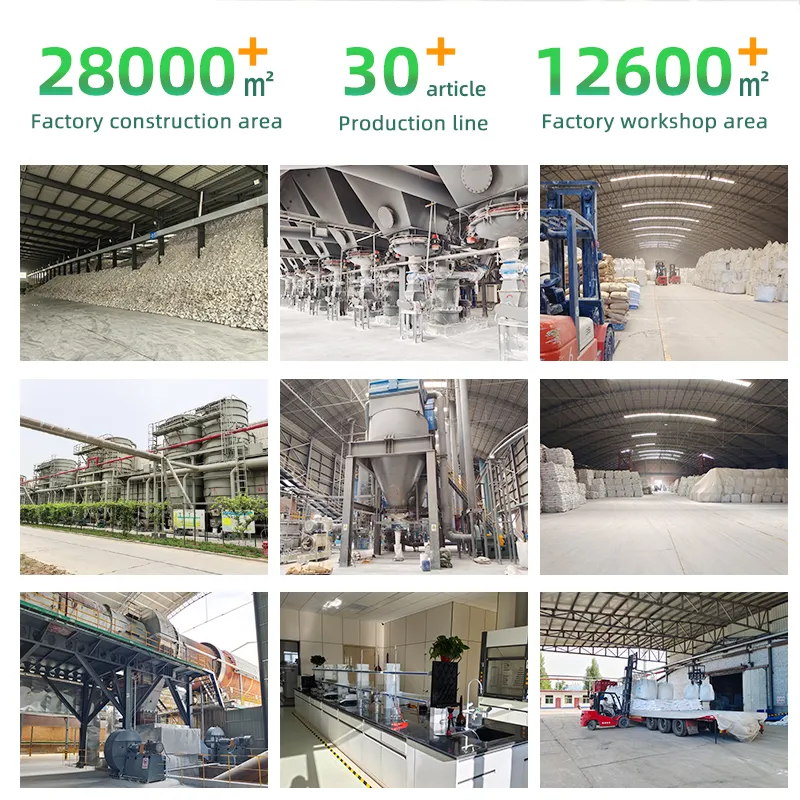
Hebei Runhuabang New Material Technology Co., Ltd. is a comprehensive enterprise integrating production, processing and sales
Get In Touch
0811, Building H2, Poly Plaza (North District), 95 Shifang Road, Chang 'an District, Shijiazhuang, Hebei
Subscribe Our Newsletter
* Trust me, we will not spam your email
xeyx.webp3
xeyx.webp1
xeyx.webp2

If you are interested in our products, you can choose to leave your information here, and we will be in touch with you shortly.