
Navigating Calcium Carbonate Solutions: Suppliers, Quality, and Specialized Varieties
Back to list
In the realm of industrial minerals, calcium carbonate stands out for its versatility, and understanding key players and products—such as calcium carbonate powder supplier, high quality calcium carbonate, nano precipitated calcium carbonate/ heavy calcium carbonate, nanometer calcium carbonate, and white calcium carbonate—is essential for industries ranging from plastics to cosmetics. These elements collectively ensure access to tailored solutions that meet strict performance standards, whether for bulk manufacturing or high-precision applications.
Calcium Carbonate Powder Supplier: Connecting Industries to Quality Materials
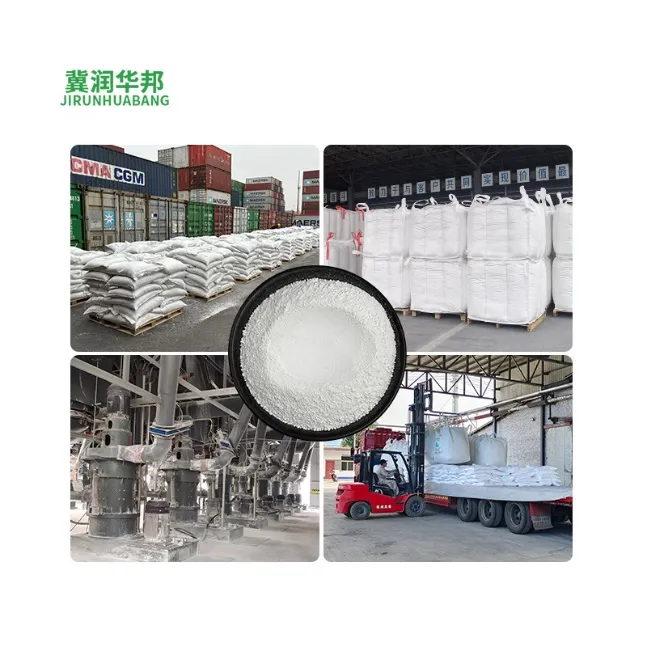
A calcium carbonate powder supplier acts as a critical link between manufacturers and end-users, ensuring a steady flow of materials tailored to specific industry needs. These suppliers curate a range of products, from industrial-grade bulk powders to specialized variants like nano or food-grade calcium carbonate, and often provide technical support to help clients select the right grade. For example, a supplier catering to the plastics industry might offer coarse heavy calcium carbonate for cost-effective filling, while one serving cosmetics could provide ultra-fine white calcium carbonate for use in powders and creams. Reputable suppliers prioritize consistency in particle size, purity, and whiteness, with strict quality control measures to meet international standards such as ISO or FDA certifications. They also manage logistics efficiently, offering flexible packaging options—from 25kg bags to bulk containers—to suit small-scale workshops and large factories alike. By partnering with a reliable calcium carbonate powder supplier, businesses can streamline procurement, reduce downtime, and ensure their production lines receive materials that align with their performance requirements.
High Quality Calcium Carbonate: A Benchmark for Performance
High quality calcium carbonate is defined by its purity, particle uniformity, and freedom from contaminants, making it indispensable for applications where precision matters. In industries like pharmaceuticals, it must meet stringent standards—often with purity levels exceeding 99%—to ensure safety in antacids or calcium supplements. For high-end paints and coatings, high quality calcium carbonate enhances opacity and durability, ensuring the finish resists chipping and fading over time. In electronics, it acts as a filler in circuit board materials, where impurities could disrupt conductivity. What sets this grade apart is rigorous processing: raw materials are carefully selected from high-purity limestone deposits, and advanced grinding or precipitation techniques ensure consistent particle size, avoiding clumping or uneven dispersion in end products. Manufacturers of high quality calcium carbonate often invest in testing equipment to verify whiteness (measured on a scale up to 98%), pH stability, and heavy metal content, ensuring compliance with industry-specific regulations. Whether used in food fortification or aerospace components, this grade delivers reliability that directly impacts the quality of the final product.
Nano Precipitated Calcium Carbonate/ Heavy Calcium Carbonate: Specialized Variants for Diverse Needs
Nano precipitated calcium carbonate/ heavy calcium carbonate represents two distinct but equally valuable forms of the mineral, each optimized for specific applications. Nano precipitated calcium carbonate (nano PCC) is a synthetic variant produced via chemical precipitation, resulting in ultra-fine particles (typically 10–100 nanometers) with a large surface area. This allows it to enhance the mechanical properties of materials like rubber and adhesives, improving tensile strength and flexibility without compromising on texture. For example, in tire manufacturing, nano PCC disperses evenly in rubber compounds, increasing wear resistance and reducing rolling resistance. In contrast, heavy calcium carbonate (GCC) is a natural variant made by grinding limestone or marble, producing coarser particles (1–100 micrometers) that excel as cost-effective fillers. It is widely used in construction materials like concrete and drywall, where its density adds strength, and in plastics, where it reduces the need for expensive resins. Together, nano precipitated calcium carbonate/ heavy calcium carbonate cater to a spectrum of needs: the former for high-performance, precision applications, the latter for bulk, cost-sensitive uses.
Nanometer Calcium Carbonate: Engineering at the Molecular Level
Nanometer calcium carbonate—also called nano calcium carbonate—represents a leap in material science, with particles measuring less than 100 nanometers. This tiny size grants it unique properties: a large surface area, high reactivity, and the ability to disperse uniformly in matrices like polymers, ceramics, or coatings. In the plastics industry, it acts as a “reinforcing filler,” boosting impact resistance in products like automotive bumpers while maintaining lightweight properties. In cosmetics, nanometer calcium carbonate adds a silky texture to foundations and powders, ensuring smooth application and better skin adherence. Its use in sealants and adhesives improves bonding strength and flexibility, making it ideal for high-stress applications like construction or aerospace. Producing nanometer calcium carbonate requires advanced precipitation techniques and strict control over reaction conditions (temperature, pH, and stirring speed) to ensure particle uniformity. While more expensive than conventional grades, its performance benefits—such as reduced material usage and enhanced product durability—make it a valuable investment for high-tech industries.
White Calcium Carbonate: Brightness and Purity for Aesthetic and Functional Uses
White calcium carbonate is prized for its high whiteness (often exceeding 95% on the ISO brightness scale) and is used in applications where appearance and purity are critical. In the paper industry, it brightens and smooths paper surfaces, making them ideal for high-quality printing and packaging. In paints and coatings, it enhances color vibrancy by reflecting light, ensuring that finishes remain vivid over time. Cosmetics manufacturers rely on white calcium carbonate for its ability to add opacity to products like face powders and toothpaste without altering their color. Even in construction, it is used in white cement and tiles to achieve a clean, uniform look. The whiteness of this variant is achieved through careful selection of raw materials—typically high-purity limestone or marble—and processing techniques that remove impurities like iron or magnesium, which can tint the powder. Whether used to enhance visual appeal or ensure color consistency, white calcium carbonate is a staple in industries where aesthetics and performance go hand in hand.
Calcium Carbonate FAQs
How does a calcium carbonate powder supplier ensure product consistency?
A calcium carbonate powder supplier maintains consistency through strict quality control: they source raw materials from reliable mines, use standardized processing equipment to ensure uniform particle size, and conduct regular lab tests for purity, whiteness, and contaminants. Many also implement batch tracking systems to trace products back to their source, allowing for quick adjustments if issues arise.
What distinguishes nanometer calcium carbonate from conventional grades?
Nanometer calcium carbonate has particles 10–100 nanometers in size, far smaller than conventional grades (which range from micrometers to millimeters). This tiny size increases surface area, enhancing its ability to disperse in materials and improve properties like strength, flexibility, and texture—making it ideal for high-performance applications in plastics, cosmetics, and adhesives.
When should I choose nano precipitated calcium carbonate over heavy calcium carbonate?
Opt for nano precipitated calcium carbonate when you need to enhance material performance (e.g., rubber elasticity or adhesive strength) and can accommodate a higher cost. Heavy calcium carbonate is better for bulk filling in cost-sensitive applications like construction or low-grade plastics, where particle size and reactivity are less critical.
What makes white calcium carbonate suitable for cosmetics?
White calcium carbonate offers high whiteness and purity, ensuring it doesn’t discolor cosmetic products. Its fine particle size adds a smooth, silky texture, while its inert nature makes it safe for skin contact—qualities that make it ideal for powders, creams, and toothpaste.
How do I verify if a supplier offers high quality calcium carbonate?
Check for certifications like ISO 9001 (quality management) or FDA registration (for food/pharma grades). Request technical data sheets (TDS) detailing purity, particle size, and whiteness. Reputable suppliers may also provide third-party lab reports to confirm compliance with industry standards.
By leveraging the expertise of a trusted calcium carbonate powder supplier and understanding the unique benefits of specialized variants like nanometer calcium carbonate and white calcium carbonate, industries can unlock new levels of performance and efficiency in their products.