Diatomite powder, a fascinating and versatile material, is gaining global recognition for its unique properties and diverse applications. Derived from the fossilized remains of single-celled algae called diatoms, this powder boasts an incredibly fine texture and a porous structure. Its natural origins and environmentally friendly characteristics make it an attractive alternative to synthetic materials in various industries. Understanding diatomite powder is becoming increasingly crucial as businesses and researchers seek sustainable and high-performance solutions.
The global demand for diatomite powder is steadily increasing, driven by its applications in filtration, absorbents, insulation, and even as a mild abrasive. According to recent market reports, the diatomite market is projected to reach significant growth in the coming years, fueled by growing environmental awareness and stricter regulations on synthetic alternatives. Regions like North America and Europe currently dominate the market, but Asia-Pacific is witnessing the fastest growth due to rapid industrialization and increasing demand.
The unique characteristics of diatomite powder address crucial challenges in multiple sectors. For example, its superior absorption capacity is vital in spill cleanup, while its insulating properties contribute to energy efficiency in construction. This material’s natural origin and biodegradability align with the global shift towards sustainability, making it an increasingly vital resource for a greener future.
Introduction to Diatomite Powder
Diatomite powder isn't a newly discovered substance; its uses have been recognized for centuries. However, modern processing techniques have unlocked its full potential, resulting in a widening range of applications across diverse fields. From being used historically as a polishing agent to its contemporary role in advanced filtration systems, its versatility continues to impress.
The increasing demand for eco-friendly and sustainable materials has significantly boosted the appeal of diatomite powder. Unlike many synthetic alternatives, it’s a naturally occurring, biodegradable resource that poses minimal environmental impact. This inherent sustainability is a key driver of its growing popularity in industries committed to reducing their carbon footprint.
Defining Diatomite Powder
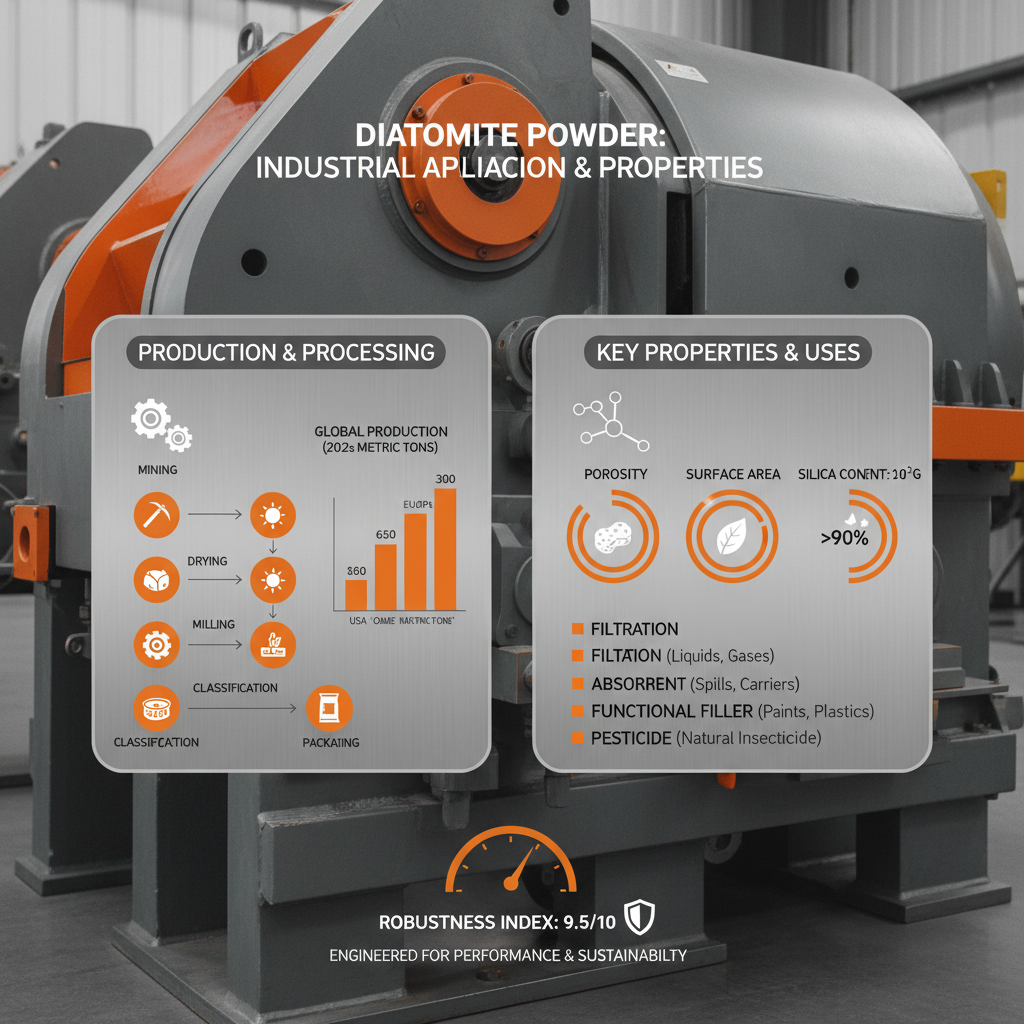
Diatomite powder is a sedimentary rock composed of the fossilized skeletons of diatoms, microscopic single-celled algae. These diatoms accumulate in lakes and oceans over millions of years, and their silica-based shells eventually form deposits of diatomaceous earth. After mining, this earth is processed – typically through drying, milling, and calcination – to create the fine powder we know as diatomite powder.
The defining characteristic of diatomite powder is its amorphous silica structure and highly porous nature. This porosity is what gives it its exceptional absorption capacity, making it ideal for applications like spill cleanup and filtration. The powder is chemically inert, meaning it doesn't react with other substances, and it exhibits a relatively low density, contributing to its versatility.
This natural material plays a vital role in addressing modern industrial needs. The filtration industry, in particular, relies heavily on diatomite powder to remove impurities from liquids, ranging from drinking water to beverages and pharmaceuticals. Its effectiveness in these applications underscores its importance in maintaining public health and safety.
Key Properties of Diatomite Powder
One of the most significant properties of diatomite powder is its high porosity. This means it has a vast network of microscopic pores, increasing its surface area and allowing it to absorb liquids remarkably well. This characteristic makes it valuable in desiccants, absorbents, and filtration media.
Another crucial property is its chemical inertness. Diatomite powder doesn't readily react with other substances, making it safe for use in food and beverage processing, pharmaceutical manufacturing, and other sensitive applications. Its stability ensures that it won't contaminate the products it comes into contact with.
Diatomite powder also possesses excellent thermal and chemical stability. It can withstand high temperatures without degrading, making it suitable for use in insulation materials and fireproofing applications. Its resistance to chemical breakdown ensures long-lasting performance even in harsh environments. These combined properties establish it as a remarkably robust and reliable material.
Applications Across Industries
The versatility of diatomite powder extends across numerous industries. In the filtration sector, it’s used extensively in pool filters, beer and wine clarification, and water purification systems. The fine powder effectively traps suspended particles, delivering clear and purified liquids.
Within agriculture, diatomite powder serves as a natural insecticide, controlling pests without harmful chemicals. It also functions as a soil amendment, improving drainage and aeration. In the construction industry, it is used as a lightweight filler in paints, plastics, and rubber, enhancing their properties.
Diatomite Powder Application Efficiency
Advantages and Long-Term Value
The adoption of diatomite powder offers significant cost advantages. Compared to many synthetic alternatives, it’s often more affordable, especially when considering its long-term durability and reduced maintenance needs. This makes it an attractive option for businesses looking to optimize their operational expenses.
From a sustainability perspective, diatomite powder presents a compelling case. Its natural origins, biodegradability, and minimal environmental impact align with the growing global focus on responsible resource management. By choosing diatomite powder, companies can reduce their carbon footprint and demonstrate a commitment to environmental stewardship.
Future Trends in Diatomite Powder
Ongoing research is exploring the potential of diatomite powder in advanced materials science. Specifically, scientists are investigating its use in creating lightweight composites, enhancing battery performance, and developing innovative drug delivery systems. These advancements promise to further expand its application scope.
The increasing emphasis on green technologies will undoubtedly drive further demand for diatomite powder. As regulations tighten around harmful chemicals and unsustainable materials, the demand for natural and biodegradable alternatives will continue to rise, positioning diatomite powder as a crucial resource for a sustainable future.
Nanotechnology is also playing a role in enhancing the properties of diatomite powder. Researchers are manipulating its structure at the nanoscale to improve its absorption capacity, filtration efficiency, and other key characteristics, opening up even more possibilities for its use in diverse industries.
Challenges and Solutions
One common challenge is the variability in the quality of diatomite deposits. The properties of the powder can differ depending on the source, requiring careful selection and processing to ensure consistent performance. Implementing rigorous quality control measures and standardized testing procedures is crucial to address this issue.
Another challenge lies in the fineness of the powder, which can pose handling and respiratory concerns. Proper ventilation systems and personal protective equipment are essential to mitigate these risks. Developing dust suppression techniques during processing and handling is also an ongoing area of research.
Finally, limited public awareness about the benefits of diatomite powder hinders its wider adoption. Increased educational initiatives and marketing efforts are needed to showcase its versatility and sustainability advantages, fostering greater demand and encouraging innovation.
Summary of Key Challenges and Solutions for Diatomite Powder Utilization
| Challenge |
Impact Area |
Severity (1-5) |
Potential Solution |
| Variable Deposit Quality |
Product Consistency |
3 |
Rigorous Quality Control |
| Dust Exposure |
Worker Safety |
4 |
Ventilation & PPE |
| Limited Awareness |
Market Adoption |
2 |
Educational Initiatives |
| Processing Costs |
Economic Viability |
3 |
Optimized Milling Techniques |
| Transportation Logistics |
Supply Chain Efficiency |
2 |
Strategic Sourcing |
| Competition from Synthetics |
Market Share |
3 |
Highlight Sustainability Benefits |
FAQS
Diatomite powder excels in water filtration due to its microscopic porous structure. It acts as a highly effective filter aid, removing suspended solids, bacteria, and other impurities from water sources. This makes it ideal for drinking water treatment plants, swimming pool filters, and industrial wastewater processing, offering a cost-effective and environmentally friendly filtration solution.
Yes, diatomite powder is generally recognized as safe (GRAS) by regulatory bodies like the FDA for use in food and beverage processing. Its chemical inertness ensures it doesn’t contaminate products. It’s commonly used to clarify beer and wine, filter fruit juices, and as an anti-caking agent in powdered foods. However, it's crucial to use food-grade diatomite powder specifically approved for these applications.
Compared to sand, diatomite powder offers significantly finer filtration capabilities. Its smaller particle size and higher porosity allow it to remove much smaller particles, resulting in clearer and purer liquids. While sand is suitable for preliminary filtration, diatomite powder is preferred for achieving a higher level of polish and removing microscopic contaminants. It also has a greater surface area for adsorption.
Diatomite powder is a naturally occurring, biodegradable material, making it an environmentally friendly alternative to synthetic filtration aids and absorbents. Its extraction has a relatively low environmental impact compared to the production of synthetic materials. Its natural origins contribute to a reduced carbon footprint and support sustainable practices across various industries.
While generally safe, diatomite powder can cause respiratory irritation if inhaled in large quantities. It's recommended to use proper ventilation and wear a dust mask during handling. Prolonged skin contact may also cause dryness, so gloves are advised. Always refer to the Safety Data Sheet (SDS) for comprehensive safety information and handling guidelines.
The lifespan of diatomite powder as a filtration medium varies depending on the level of contamination in the liquid being filtered. It will eventually become clogged with impurities and require replacement. Regular monitoring of filter pressure drop is key to determining when replacement is necessary. Typically, diatomite filter cakes last between several hours to a few weeks before needing to be backwashed or replaced.
Conclusion
In conclusion, diatomite powder stands as a remarkably versatile and sustainable material with a wide array of applications. Its unique properties – high porosity, chemical inertness, and thermal stability – make it an ideal choice for filtration, absorption, and numerous industrial processes. The growing demand for eco-friendly solutions further solidifies its position as a key resource for a greener future.
Looking ahead, continued research and development promise to unlock even more potential uses for diatomite powder, particularly in advanced materials science and nanotechnology. By embracing innovation and promoting awareness of its benefits, we can harness the full power of this natural resource to address global challenges and create a more sustainable world. Visit our website at www.jirunhuabang.com to learn more about our diatomite powder products and solutions.