
Carbon black sustainable innovative cornerstone for global manufacturing enhancing performance in rubber plastics coatings inks batteries boosting durability
Back to list
Nov . 28, 2025 15:47
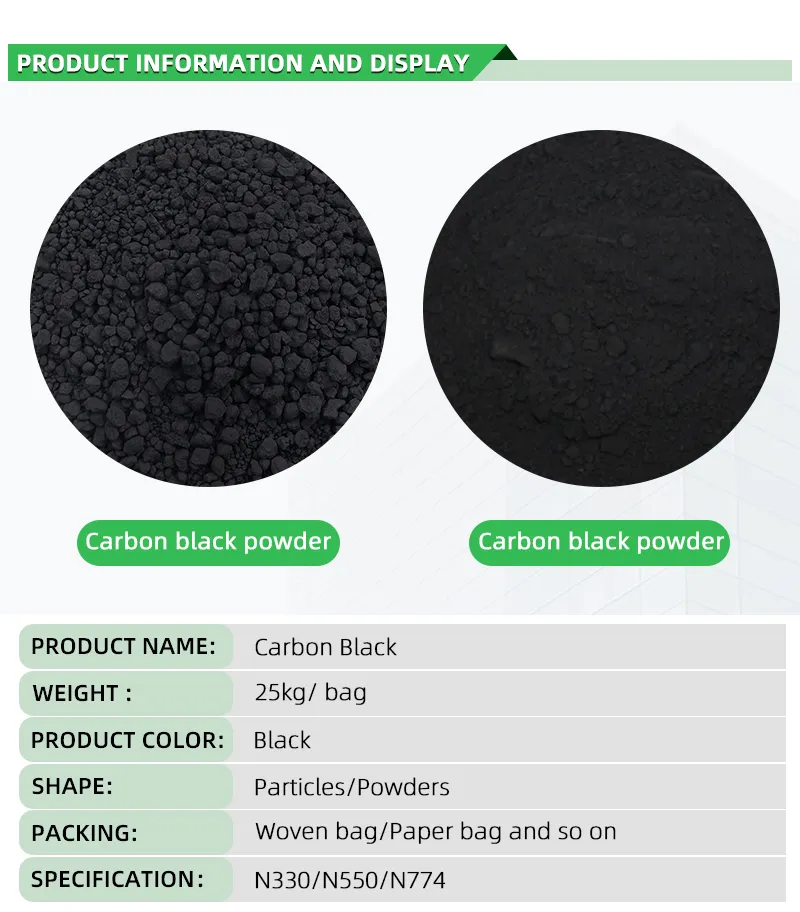
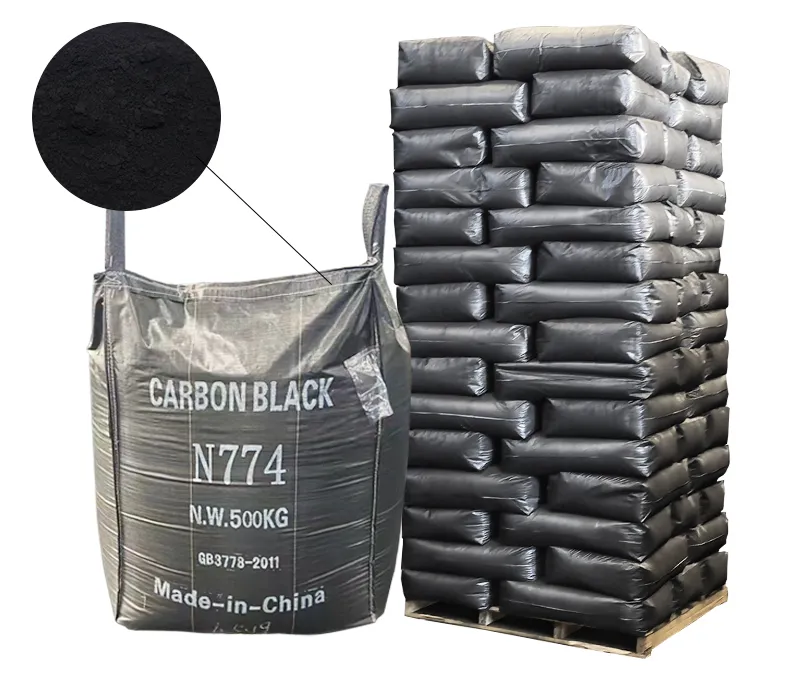
Carbon Black emerges as irreplaceable material in modern industrial ecosystem, produced through controlled incomplete combustion of organic feedstocks—encompassing petroleum byproducts, natural gas, and increasingly bio-based resources like vegetable oils or agricultural residues. This production process is defined by precise regulation of temperature, oxygen concentration, and feedstock flow rate, which dictate core properties of final product. Unlike unrefined soot generated by uncontrolled burning, carbon black features uniform particle size, tailored surface porosity, and consistent chemical composition. Such customization allows it to adapt to diverse industrial demands, from reinforcing rubber to enabling advanced battery technologies, making it foundational element in sectors that drive global economy.
Fundamental characteristics of carbon black stem from its unique physical structure: ultra-fine particle size (ranging from tens to hundreds of nanometers) creates expansive surface area, while porous surface texture enhances adhesion and adsorption capabilities. These structural traits translate into five core functional strengths that underpin its industrial value. First, reinforcement—carbon black particles form strong mechanical bonds with polymer matrices (such as rubber or plastic), strengthening molecular chains and resisting wear. Second, tinting strength—its ability to absorb visible light uniformly delivers deep, fade-resistant black hues. Third, conductivity—specialized grades with interconnected particle networks enable static dissipation or electrical conduction. Fourth, UV resistance—carbon black absorbs harmful solar radiation, preventing degradation of host materials. Fifth, dispersibility—high-quality grades mix evenly with host materials, ensuring consistent performance across batches. These traits often work synergistically; for example, carbon black in automotive plastics provides both UV protection and tinting strength, while in tires it combines reinforcement and wear resistance.
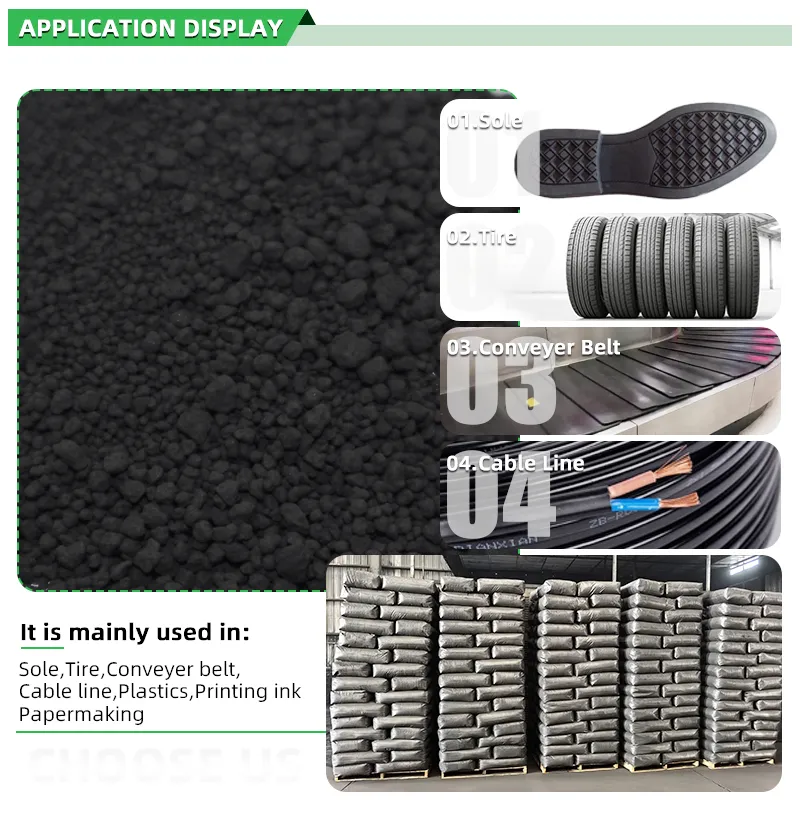
Rubber industry remains primary consumer of carbon black, with tire manufacturing accounting for majority of global demand—but recent innovations have expanded its role beyond traditional applications. Tire treads, which endure constant friction with road surfaces, rely on carbon black grades optimized for abrasion resistance. A leading tire manufacturer in South Korea developed a specialized carbon black grade with high structure (dense particle aggregation) for electric vehicle tires; this grade reduced tread wear by 25% compared to standard grades, addressing key concern of electric vehicle owners about tire replacement costs. Tire sidewalls use carbon black to balance flexibility and UV resistance—Japanese tire maker reported that sidewalls with modified carbon black retained 90% of elasticity after five years of outdoor exposure, compared to 60% for non-reinforced alternatives. Tire carcasses, which support vehicle weight, integrate carbon black with silica in hybrid filler systems; this combination reduces rolling resistance by 15%, improving fuel efficiency for internal combustion engines and extending range for electric vehicles.
Non-tire rubber applications have seen significant innovation with carbon black. Industrial seals and gaskets for hydraulic systems use carbon black reinforced with graphene nanoparticles; German machinery firm reported that these seals withstood pressure of 500 bar without leakage, doubling service life compared to standard seals. Conveyor belts for food processing (avoiding direct contact with food) use food-safe carbon black grades that resist microbial growth—Brazilian agricultural processor reduced contamination incidents by 40% after switching to these belts. Hoses for chemical transport use carbon black with surface treatment to enhance chemical resistance; American chemical distributor noted that hoses with treated carbon black endured exposure to sulfuric acid for six months, compared to two months for untreated versions. Even consumer rubber goods benefit from advanced carbon black grades—running shoe soles with carbon black and air bubble hybrid fillers improved shock absorption by 30%, according to a European sportswear brand.
Plastic industry has embraced carbon black for both functional enhancement and sustainability. Coloring applications now include smart plastics—carbon black infused with thermochromic pigments creates packaging that changes color when exposed to heat, indicating product spoilage (for non-food items like cosmetics). UV resistance remains critical for outdoor plastics: Indian construction firm used carbon black reinforced PVC pipes for irrigation systems; these pipes survived 10 years of exposure to tropical sunlight without cracking, compared to three years for standard pipes. Conductive plastics with carbon black are central to electronic waste recycling—sorting machines use carbon black infused plastic sensors to detect and separate different types of electronic components. 3D printing has opened new avenues: carbon black reinforced PLA filaments create parts with tensile strength comparable to aluminum, used by aerospace suppliers for non-flight components (adhering to aviation industry exclusion).
Advanced plastic applications include carbon black in biodegradable polymers. Dutch packaging firm developed carbon black infused polylactic acid (PLA) packaging that degrades in industrial compost within six months, while retaining color and strength during use. Carbon black also enhances recycling of plastics—recycled polyethylene with carbon black retains 80% of original strength after three recycling cycles, compared to 50% for non-reinforced recycled plastic. Industrial plastic parts like gears and bearings use carbon black with molybdenum disulfide hybrid fillers; Chinese manufacturing firm reported that these gears reduced friction by 20%, extending service life in conveyor systems by 50%.
Coatings industry has expanded carbon black applications beyond traditional coloring. Industrial coatings for offshore wind turbines use carbon black with zinc phosphate hybrid pigments; Danish wind energy firm noted that these coatings resisted saltwater corrosion for 15 years, doubling service life of turbine towers. Architectural coatings now include carbon black in self-cleaning paints—Titanium dioxide and carbon black hybrid coatings break down dirt when exposed to sunlight, reducing maintenance for commercial buildings by 30%. Specialty coatings for electronics use conductive carbon black in EMI (Electromagnetic Interference) shielding—South Korean electronics maker used these coatings for smartphone casings, reducing EMI by 40% and improving signal quality. High-temperature coatings for industrial furnaces use carbon black with ceramic fillers; German steel mill reported that these coatings withstood temperatures of 1200°C for five years, compared to two years for standard coatings.

Printing ink industry has integrated carbon black into high-performance formulations. Digital printing inks use carbon black with high dispersibility to ensure sharpness in 3D printing of labels—American packaging firm achieved 500 dpi resolution with these inks, improving barcode scannability. UV-curable inks with carbon black resist fading under UV exposure—outdoor billboards printed with these inks retained color for three years, compared to one year for standard inks. Security inks use carbon black with magnetic properties—European banknote printer developed inks that are detectable by magnetic sensors, enhancing counterfeit protection. Industrial marking inks for metal parts use carbon black with epoxy resins—Japanese automotive supplier noted that these marks remained legible after heat treatment at 800°C, critical for quality control.
Emerging industries are driving demand for specialized carbon black grades. Energy storage is a key growth area: lithium-ion batteries use carbon black in both anode and cathode—Chinese battery maker reported that carbon black with high graphitization improved battery energy density by 20%, extending range of electric vehicles. Hydrogen fuel cells use carbon black in gas diffusion layers—German fuel cell manufacturer used carbon black with hydrophobic treatment to improve water management, increasing fuel cell efficiency by 15%. Carbon capture and storage (CCS) uses carbon black as adsorbent—Norwegian oil firm developed carbon black based adsorbents that capture 90% of carbon dioxide from flue gases, with regeneration capability for 1000 cycles. Smart materials use carbon black in strain sensors—American aerospace supplier (non-flight components) developed sensors that detect structural deformation, used in bridges and buildings for structural health monitoring.
Sustainable production of carbon black has advanced significantly, addressing environmental concerns. Bio-based feedstocks include rapeseed oil, palm oil byproducts, and agricultural residues like corn cobs—French carbon black producer uses 100% bio-based feedstocks, reducing carbon footprint by 40% compared to petroleum-based production. Waste heat recovery systems are standard in modern plants—American plant captures 80% of heat from combustion processes, using it to generate electricity for on-site use. Carbon capture technology is being integrated: Canadian plant uses amine-based capture to reduce emissions by 60%, with captured carbon dioxide used in enhanced oil recovery. Recycling of carbon black has matured: pyrolysis of end-of-life tires recovers carbon black, which is refined to meet industrial standards—Indian recycling firm processes 100,000 tons of tires annually, producing carbon black used in rubber and plastic applications.
Circular economy initiatives involve collaboration across supply chains. Tire manufacturers have partnered with recycling firms to develop closed-loop systems—Michelin’s “Tirecycle” program recovers carbon black from used tires and reuses it in new tire production. Plastic manufacturers use recycled carbon black in packaging—Coca-Cola’s European division uses recycled carbon black in plastic bottles, reducing virgin material use by 15%.
Share