Diatomite emerges as a nature-derived eco-friendly material that connects sustainable living and circular economy, adapting innovatively to diverse demands of green construction, air purification, and biodegradable packaging. Unlike synthetic materials dependent on non-renewable resources like petroleum or emitting toxic volatile compounds during production, diatomite originates from fossilized diatoms—microscopic aquatic organisms with silica-based cell walls that fossilize over millions of years—endowing it with inherent porous structure and strong adsorption capacity. These unique traits elevate it beyond conventional industrial materials: while synthetic adsorbents often lose efficiency over time, diatomite maintains stable performance due to its rigid silica pores. It serves as a core component in interior finishes, water filtration, and greenhouse insulation, seamlessly integrating into eco-conscious production chains. As societies pursue eco-conscious development, diatomite transcends single-function roles to become a multi-purpose solution blending natural properties, functional performance, and environmental responsibility—addressing both material needs and sustainability goals.
Resource foundation of Diatomite combines natural abundance and ecological compatibility, with deposits distributed across diverse geological zones worldwide. Diatomite forms through millions of years of diatom accumulation in marine or freshwater basins, where consistent water conditions preserve their silica cell walls. Deposits are classified by habitat to match application needs: marine diatomite, found in polar marine sediments like those near northern Scandinavia, features finer, denser pores and stronger adsorption capacity—ideal for air purification and high-precision water filtration; freshwater diatomite, abundant in ancient lake beds such as those in eastern Africa, has larger, interconnected pores and superior breathability—perfect for green construction and interior finishes. Extraction adheres to strict eco-friendly standards: surface mining avoids deep geological disturbance that could harm aquifers, and mined areas undergo systematic ecological restoration—replanting native grasses to stabilize soil, installing aquatic plant buffers along waterways, and monitoring water quality for years post-extraction. Circular economy is deeply embodied in waste reuse: coarse residues from diatomite purification, which retain partial porous structure, are ground into granules for greenhouse insulation; fine dust generated during processing is recycled into additives for biodegradable packaging, minimizing resource waste and closing production loops.


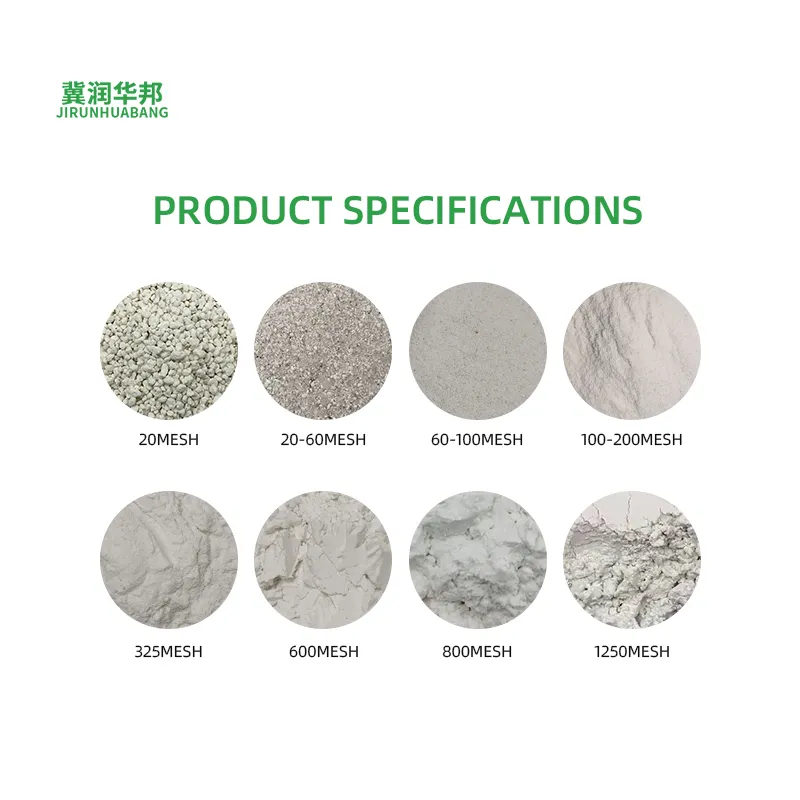
Production processes of Diatomite focus on preserving core properties and reducing environmental impact, avoiding chemical treatments that could compromise its natural traits. Processing relies on gentle physical methods to maintain porous structure and adsorption capacity: low-speed dry grinding, operating at calibrated speeds to prevent particle compression, replaces high-temperature treatment that would collapse delicate pores; air classification uses controlled airflow to separate particles by size without chemical reagents, precisely matching specific application needs—ultra-fine powder for high-efficiency air filters, medium powder for smooth interior coatings, and coarse granules for rigid insulation. High-purity diatomite, used in precision water filtration, undergoes closed-loop wet grinding: recycled water acts as a grinding medium to avoid contamination, and the water is filtered and reused in subsequent batches, eliminating wastewater discharge. Innovative low-temperature activation further enhances adsorption capacity: diatomite is heated at moderate temperatures in oxygen-controlled environments to remove organic impurities trapped in pores, opening blocked channels without damaging silica structures. Solar-powered drying replaces fossil fuel heating for final processing, cutting carbon footprint by leveraging renewable energy. These processes not only retain diatomite’s natural eco-friendly traits but also optimize its performance for targeted applications.
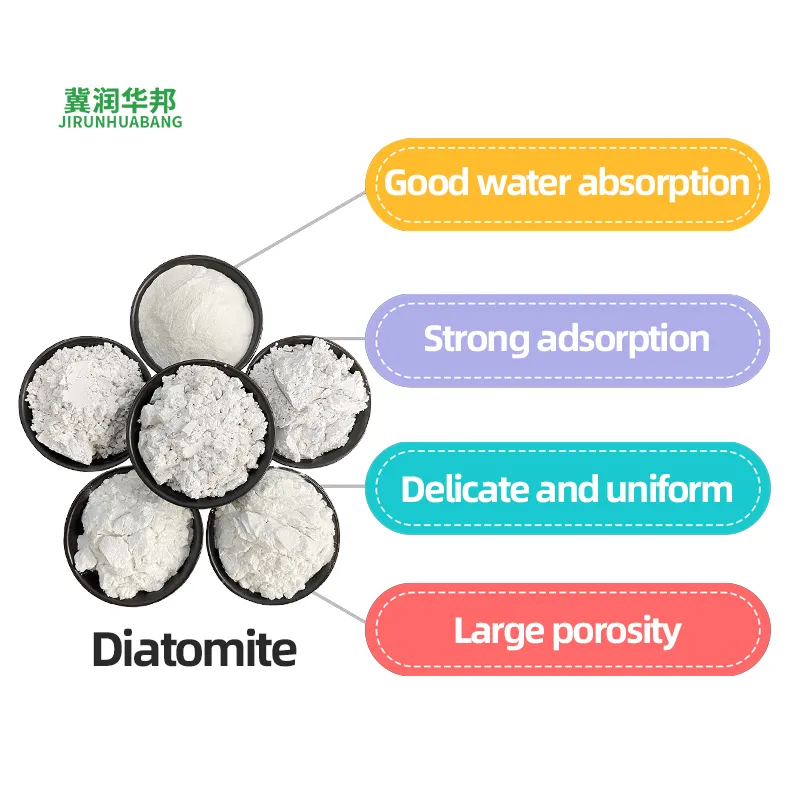
Core properties of Diatomite make it irreplaceable across industries, with each trait rooted in its unique geological origin. Porous structure—formed by the fossilized silica cell walls of diatoms, creating countless tiny interconnected pores that form a vast internal surface area—enables exceptional adsorption capacity: it actively traps volatile organic compounds like formaldehyde and benzene from indoor air, captures dust and pollen particles as small as fine particulate matter, and absorbs heavy metals such as lead and mercury, plus suspended solids and organic impurities in water. Breathability and moisture regulation, linked to its porous network, realize dynamic humidity control: in interior spaces, it absorbs excess moisture during rainy seasons to prevent wall mold and furniture rot, and releases stored moisture gradually when air turns dry, maintaining a comfortable relative humidity range. Chemical stability, a result of its silica composition, ensures long-term durability: it resists corrosion from common industrial acids and alkalis, making it suitable for harsh environments like industrial wastewater treatment facilities and long-term interior use. Thermal insulation, derived from trapped air within its pores, adds critical value to green construction and greenhouses—when mixed into wallboards or insulation materials, it reduces heat transfer between indoor and outdoor spaces, cutting energy use for heating and cooling by a notable margin.
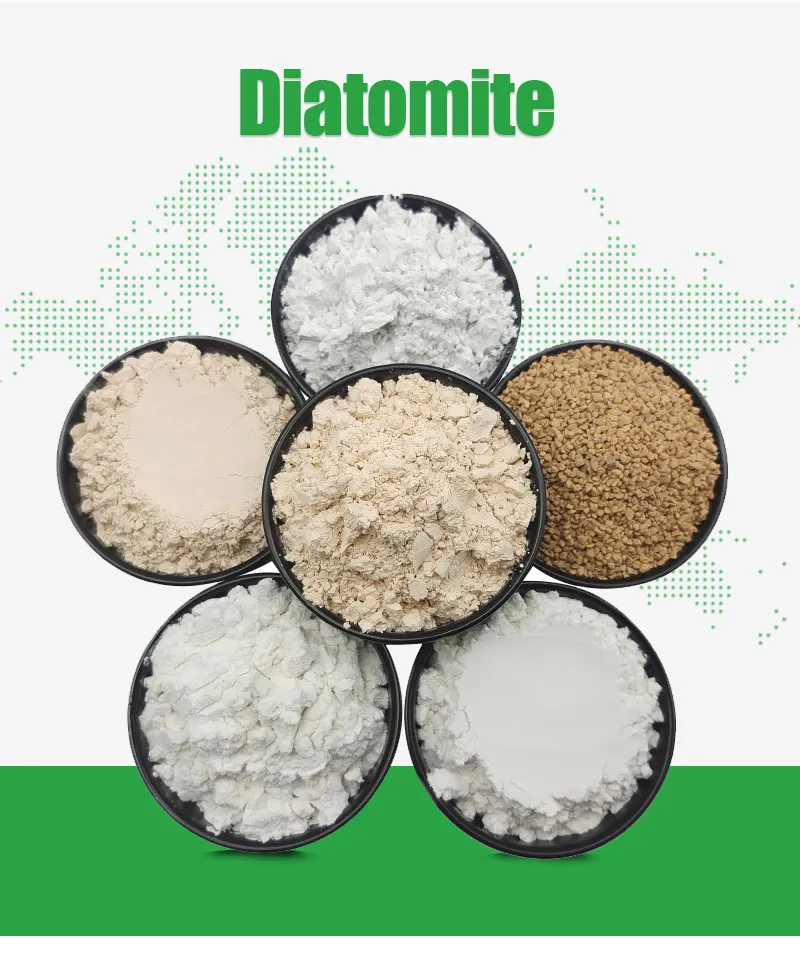
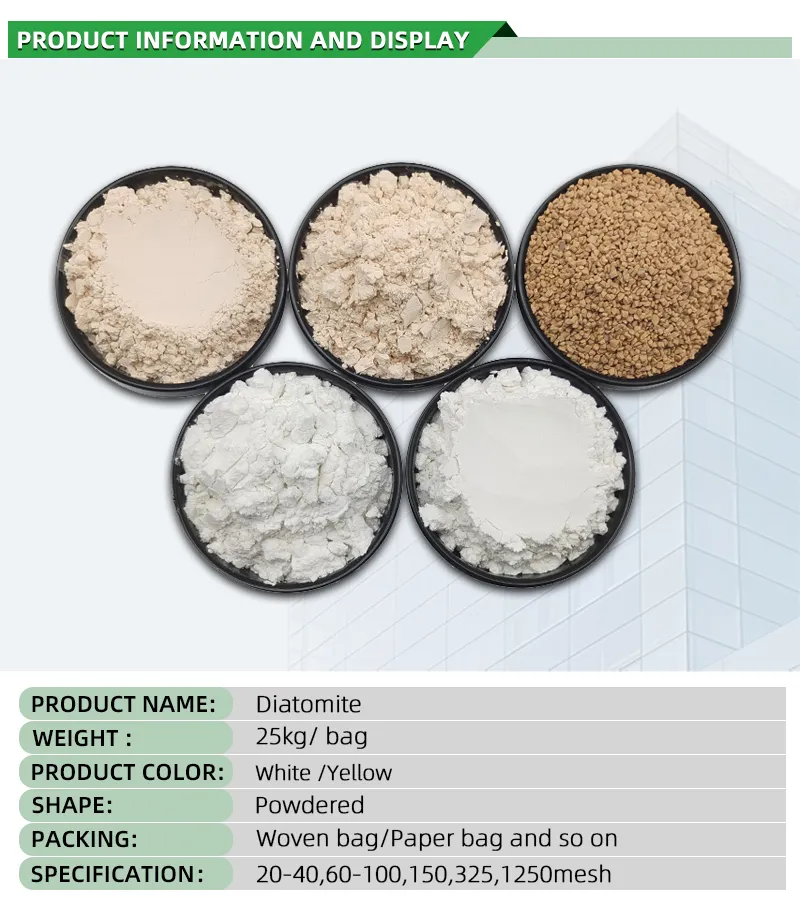
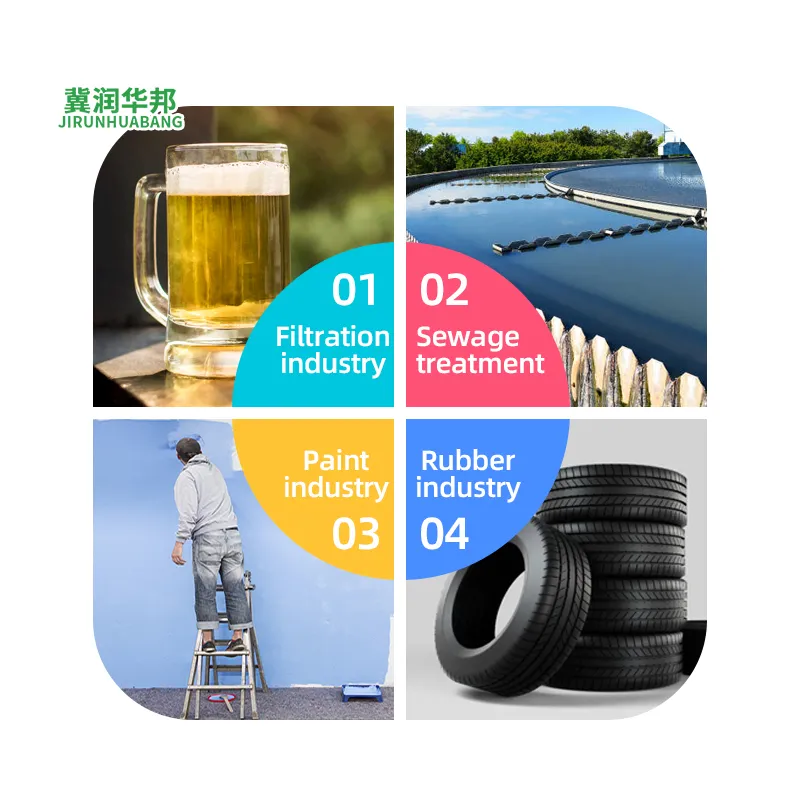
Diatomite excels in diverse innovative scenarios, with real-world applications demonstrating its versatility. Green construction leverages its thermal insulation and breathability: diatomite-based exterior wall boards are used in office buildings and residential complexes, reducing energy consumption for heating by decreasing heat loss through walls; their breathability allows moisture to escape, preventing condensation that leads to wall cracking. Interior finishes integrate diatomite into everyday spaces: diatomite coatings are applied to living room and bedroom walls, purifying air by adsorbing formaldehyde released from wooden furniture and carpet adhesives; decorative panels mixed with diatomite offer textures ranging from smooth matte to granular rustic, complementing minimalist, Scandinavian, or natural design styles. Air purification applies it in high-traffic spaces: diatomite-based filters in office air purifiers capture dust and printer fumes, while industrial filters use it to remove toxic particles from textile factory emissions. Water filtration uses granular diatomite as a core medium in multi-stage systems: it purifies drinking water by absorbing sediment and micro-impurities, and treats textile wastewater by trapping dye residues before discharge. Biodegradable packaging is a cutting-edge application—diatomite added to cornstarch-based packaging enhances moisture resistance, preventing fruit and vegetable spoilage, and boosts rigidity to withstand shipping, while remaining fully compostable in home or industrial compost systems. Greenhouse insulation uses coarse diatomite granules mixed with straw and natural binders, forming lightweight panels that retain heat during cold nights to protect tomato and lettuce crops, while regulating humidity to reduce fungal growth on leaves.
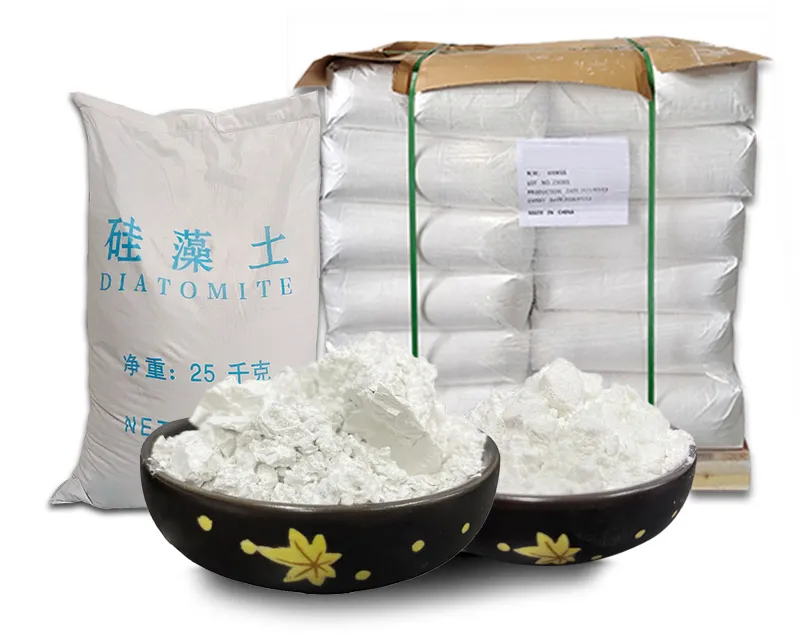
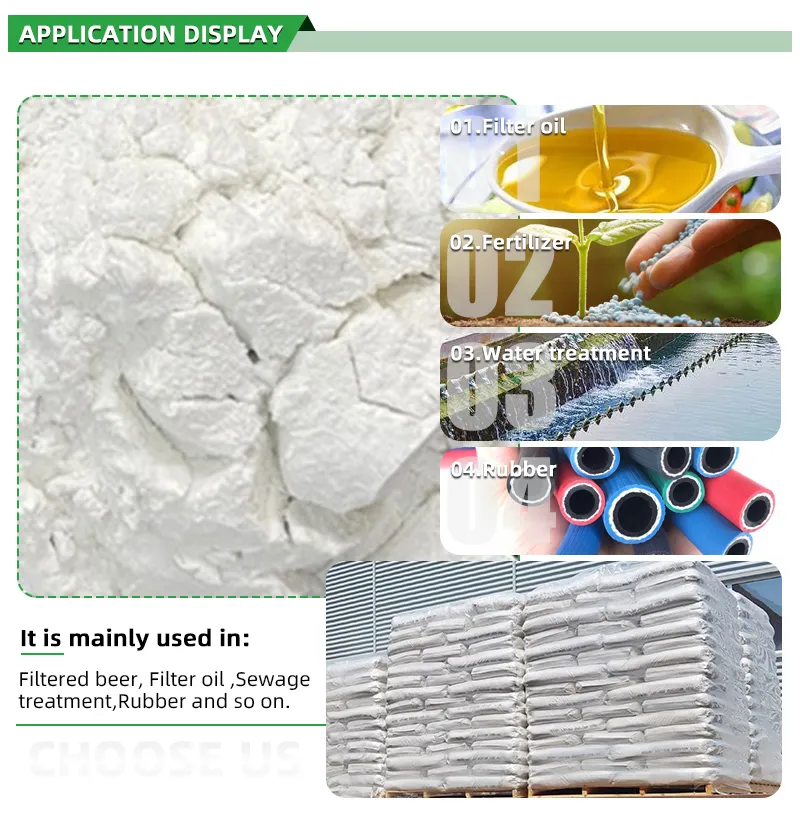
Quality control of Diatomite is tailored to specific applications, with rigorous testing to ensure consistent performance. For air and water filtration grades, adsorption efficiency tests measure pollutant-trapping ability: formaldehyde adsorption tests analyze gas concentration before and after passing through diatomite samples, while heavy metal tests measure contaminant levels in water pre- and post-filtration. Pore size analysis uses microscopic imaging to ensure pores match target substances—fine pores for volatile organic compounds, larger pores for suspended solids. For building materials, thermal insulation tests measure heat transfer rates in controlled chambers to verify energy-saving claims; breathability tests use climate-controlled chambers that cycle between humid and dry conditions, monitoring how much moisture diatomite absorbs and releases. For biodegradable packaging, moisture resistance tests expose samples to high-humidity environments to check for water penetration, while biodegradability tests place samples in compost to measure decomposition time. For greenhouse insulation, compressive strength tests ensure granules resist crumbling under handling, and thermal retention tests track heat loss in simulated greenhouse conditions. Recycled residues undergo strict purification—magnetic separation removes metal impurities, and sieve analysis ensures particle size consistency—followed by performance tests to match the standards of virgin diatomite. These comprehensive measures guarantee diatomite meets industry requirements across all scenarios.