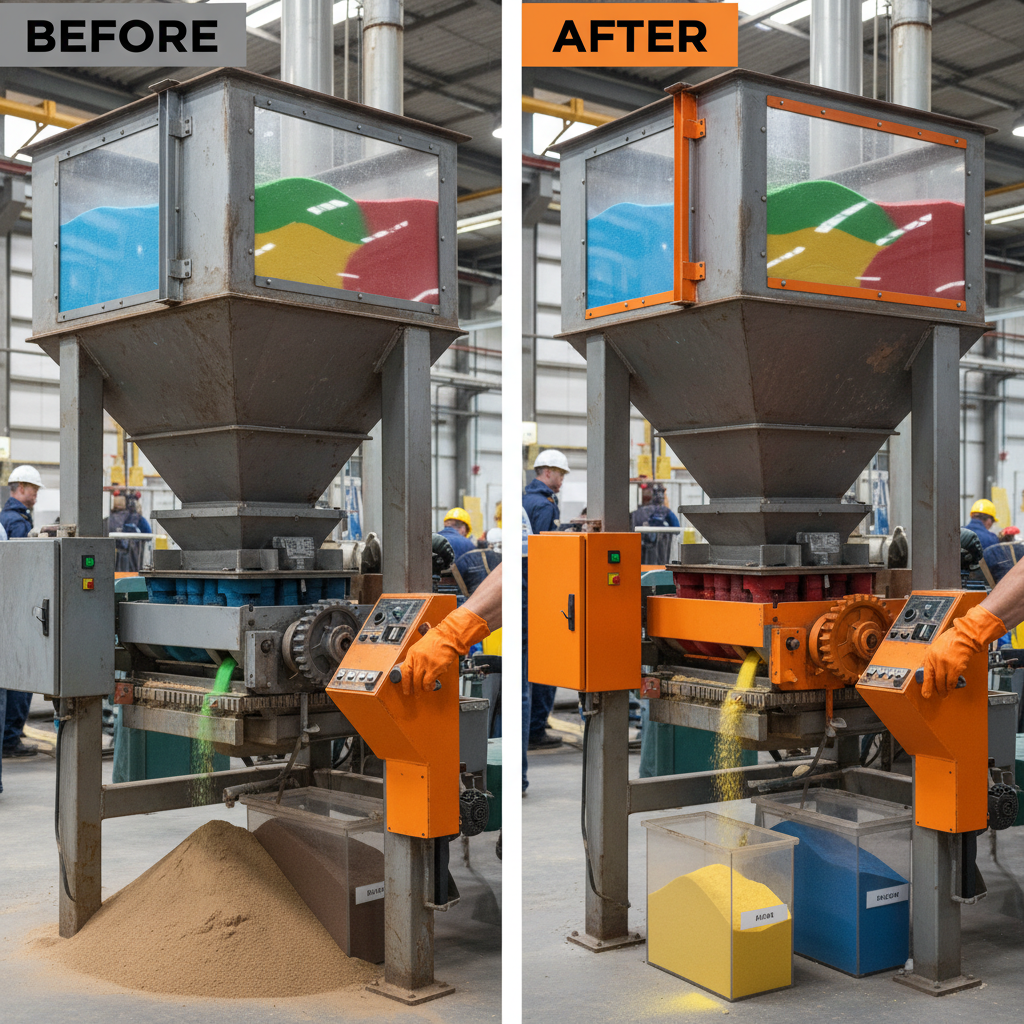
Fine colored sand, a versatile material often overlooked, plays a crucial role in a surprisingly wide array of applications, from artistic endeavors and landscaping to specialized industrial processes and increasingly, sustainable construction. Its unique properties, particularly its aesthetic appeal and granular consistency, make it a sought-after component in countless projects worldwide. Understanding the nuances of fine colored sand – its composition, processing, and applications – is becoming increasingly important as we seek innovative and sustainable solutions for a rapidly changing world.
Globally, the demand for fine colored sand is experiencing steady growth, driven by factors such as urbanization, increasing awareness of environmental aesthetics, and the rise of specialized industries like glass manufacturing and decorative coatings. The United Nations Environment Programme (UNEP) highlights the importance of sustainable sand sourcing to prevent environmental degradation, and this extends to the production of fine colored sand. Countries with robust construction sectors and thriving tourism industries, like China, the United States, and several European nations, are significant consumers and producers of this material.
The appeal of fine colored sand lies not only in its visual qualities but also in its adaptability. It’s utilized in creating durable and visually striking surfaces, contributing to the aesthetic appeal of urban spaces and providing vital raw materials for essential manufacturing processes. Its increasing use in eco-friendly building materials demonstrates its potential for a more sustainable future.
Introduction to fine colored sand
Fine colored sand isn't merely a decorative element; it's a versatile material with significant industrial applications. From providing the vibrant hues in glass production to serving as a crucial component in specialized coatings and polymers, its properties extend far beyond aesthetics. The demand for consistently high-quality fine colored sand is growing, necessitating improvements in sourcing, processing, and quality control.
The global market for fine colored sand is intricately linked to broader economic trends, particularly in construction, manufacturing, and the art & design sectors. Increasing focus on sustainability is driving demand for eco-friendly production methods and responsible sourcing practices, challenging traditional extraction techniques and prompting innovation in recycling and alternative materials.
Defining Fine Colored Sand
Fine colored sand refers to granular material composed of finely divided rock and mineral particles, typically ranging in size from 0.0625 to 2 millimeters in diameter. The “colored” aspect arises from the presence of various mineral impurities, often iron oxides, manganese, and other trace elements, resulting in a spectrum of hues including reds, yellows, browns, greens, and even blues. This differs from standard silica sand, which is typically colorless or white.
Its connection to modern industry stems from its unique physical and chemical properties. The fine grain size contributes to a high surface area, making it ideal for use as a filler, abrasive, or pigment. The mineral composition imparts specific characteristics – for example, iron oxide-rich sand is highly valued in the production of red-colored glass and paints.
Crucially, the availability and quality of fine colored sand are directly relevant to humanitarian needs, particularly in providing essential materials for construction and infrastructure development in remote or disaster-affected areas. It offers a cost-effective and readily available resource for creating durable and aesthetically pleasing structures.
Key Characteristics of Fine Colored Sand
The defining characteristics of fine colored sand go beyond just its aesthetic diversity. Its grain size distribution is critical, influencing its flowability, packing density, and performance in different applications. Consistent grain size ensures uniform mixing and optimal functionality in coatings, mortars, and other composite materials.
Chemical composition dictates the color and other properties. The presence of iron oxides, for example, not only creates red and brown hues but also imparts varying degrees of magnetic susceptibility. Understanding the specific mineralogical makeup is essential for tailoring the sand to specific industrial requirements.
Hardness and durability are also key. Fine colored sand must be resistant to abrasion and weathering to maintain its performance over time. Mohs hardness testing is commonly used to assess this property, ensuring that the sand can withstand the rigors of its intended application. Porosity also plays a role, affecting the sand's ability to absorb liquids and influence its binding characteristics. Specific Gravity indicates the density, crucial for calculating volumetric needs in construction and manufacturing.
Application Spectrum of Fine Colored Sand
The applications of fine colored sand are remarkably diverse. In the construction industry, it serves as a crucial component in colored concrete, paving stones, and decorative plasters, adding aesthetic appeal and durability to architectural projects. It’s also used in creating specialized mortars and grouts with enhanced bonding properties.
The glass manufacturing sector is a major consumer of fine colored sand, particularly varieties rich in iron oxide for producing amber, brown, and red-tinted glass. The sand’s composition directly influences the glass’s color, clarity, and strength. Beyond glass, it’s used in the production of paints and coatings, providing both color and texture.
The arts and crafts world utilizes fine colored sand for sand art, decorative displays, and various artistic installations. In post-disaster relief operations, it can be combined with cement to create basic building blocks for temporary shelters, offering a cost-effective and readily available construction material in remote areas.
Fine Colored Sand Application Breakdown
Advantages & Long-Term Value Proposition
The advantages of utilizing fine colored sand extend beyond aesthetics and encompass significant cost benefits and enhanced sustainability. Compared to synthetic pigments or alternative materials, fine colored sand offers a cost-effective solution for adding color and texture to various products. Its natural origin contributes to a lower carbon footprint compared to manufactured alternatives.
From a long-term perspective, the durability and weather resistance of fine colored sand contribute to extended product lifecycles, reducing the need for frequent replacements and minimizing waste. This aligns with principles of circular economy and promotes resource efficiency. The inherent safety of the material also adds value, as it is generally non-toxic and poses minimal environmental hazards when responsibly sourced and handled.
Future Trends & Innovations
Innovations in processing and refining techniques are poised to unlock new applications for fine colored sand. Nanotechnology is being explored to enhance its properties – for instance, creating coatings with increased UV resistance or self-cleaning capabilities. Furthermore, advancements in digital sand casting are enabling the creation of complex and intricate designs using fine colored sand as the primary material.
Sustainability is driving a shift towards recycled fine colored sand, sourced from construction and demolition waste or industrial byproducts. This reduces reliance on virgin materials and minimizes environmental impact. The integration of AI-powered quality control systems is also streamlining production processes and ensuring consistent product quality.
Challenges and Sustainable Solutions
One of the primary challenges associated with fine colored sand is ensuring sustainable sourcing practices. Traditional extraction methods can lead to environmental degradation, including habitat loss and water pollution. Responsible mining operations and the implementation of strict environmental regulations are crucial to mitigate these risks.
Another challenge is maintaining consistent quality and color uniformity, which can vary depending on the source and processing methods. Implementing standardized testing procedures and investing in advanced sorting and grading technologies are essential for ensuring product reliability.
Innovative solutions include exploring alternative sourcing options like riverbed restoration projects and utilizing industrial byproducts as a source of fine colored sand. Promoting circular economy principles and investing in research and development of sustainable processing technologies are key to addressing these challenges and unlocking the full potential of this valuable material.
Summary of Challenges and Potential Solutions for fine colored sand
| Challenge |
Impact Level (1-10) |
Potential Solution |
Implementation Cost (1-10) |
| Unsustainable Sourcing Practices |
8 |
Certified Responsible Mining & Reclamation |
6 |
| Inconsistent Color & Quality |
7 |
AI-Powered Quality Control Systems |
7 |
| Limited Availability of Specific Colors |
5 |
Advanced Color Blending & Processing Techniques |
5 |
| Environmental Impact of Processing |
6 |
Closed-Loop Water Recycling Systems |
4 |
| Lack of Public Awareness |
4 |
Educational Campaigns & Industry Certifications |
3 |
| Transportation Costs & Logistics |
5 |
Regional Production Hubs & Optimized Supply Chains |
6 |
FAQS
While both are primarily composed of silica, fine colored sand distinguishes itself through the presence of mineral impurities—typically iron oxides, manganese, and other trace elements—that impart vibrant hues. Silica sand is generally colorless or white. This difference in composition leads to varied applications; silica sand is ideal for glass clarity while colored sand is perfect for aesthetic applications like colored concrete or artistic uses. Colored sand often has a slightly different grain size distribution too, impacting its flowability and use as a filler.
Look for suppliers with certifications demonstrating responsible mining practices, such as those adhering to environmental standards like ISO 14001. Inquire about their sourcing locations and reclamation efforts. Support companies that prioritize transparency and can provide detailed information about their supply chain. Purchasing from local suppliers can also reduce transportation emissions and support regional economies. Asking about sediment control practices and habitat restoration programs is a great indicator of a supplier’s ethical commitment.
Fine colored sand is widely used in construction for creating visually appealing and durable surfaces. Common applications include colored concrete for flooring, patios, and decorative walls; paving stones with vibrant hues; decorative plasters and renders; and colored mortars for bricklaying and tile setting. It's also utilized in creating textured finishes and artistic elements in landscaping and architectural designs. The color adds aesthetic value while maintaining structural integrity.
Yes, especially when sourced sustainably. Utilizing recycled fine colored sand from construction debris or industrial byproducts significantly reduces the environmental impact. The natural composition of the sand minimizes the need for synthetic pigments, further lowering its carbon footprint. When combined with eco-friendly binders, like bio-based resins, it can create truly sustainable building materials. However, it’s crucial to assess the lifecycle impact, including extraction, processing, and transportation.
Grain size distribution is critical. Finer grains pack more densely, leading to smoother surfaces and increased strength in applications like concrete. A uniform grain size ensures even color distribution and consistent flowability. Conversely, a wider distribution can create a more textured finish. Too much fine material can reduce permeability, while too much coarse material can weaken the mixture. Careful control of grain size is essential for optimizing performance.
Long-term durability depends on the mineral composition and exposure to weathering. Sand rich in iron oxides may exhibit some fading over time due to oxidation. However, proper sealing and surface treatments can mitigate this. The sand's hardness and resistance to abrasion also play a role. Choosing a sand with a high Mohs hardness rating and ensuring proper drainage can help prevent erosion and prolong its lifespan in outdoor environments. Regular maintenance, like reapplying sealant, is recommended.
Conclusion
Fine colored sand, though often overlooked, is a remarkably versatile material with applications spanning construction, manufacturing, art, and even humanitarian aid. Its unique properties – from its vibrant colors and aesthetic appeal to its durability and adaptability – make it a valuable resource for a wide range of industries. Understanding its sourcing, processing, and potential for sustainable practices is increasingly critical in a world prioritizing environmental responsibility and resource efficiency.
Looking ahead, continued innovation in processing techniques, coupled with a strong commitment to responsible sourcing, will unlock even greater potential for this material. By embracing circular economy principles and investing in research and development, we can ensure that fine colored sand continues to contribute to a more sustainable and visually enriching future. Visit our website at fine colored sand to learn more about our products and services.