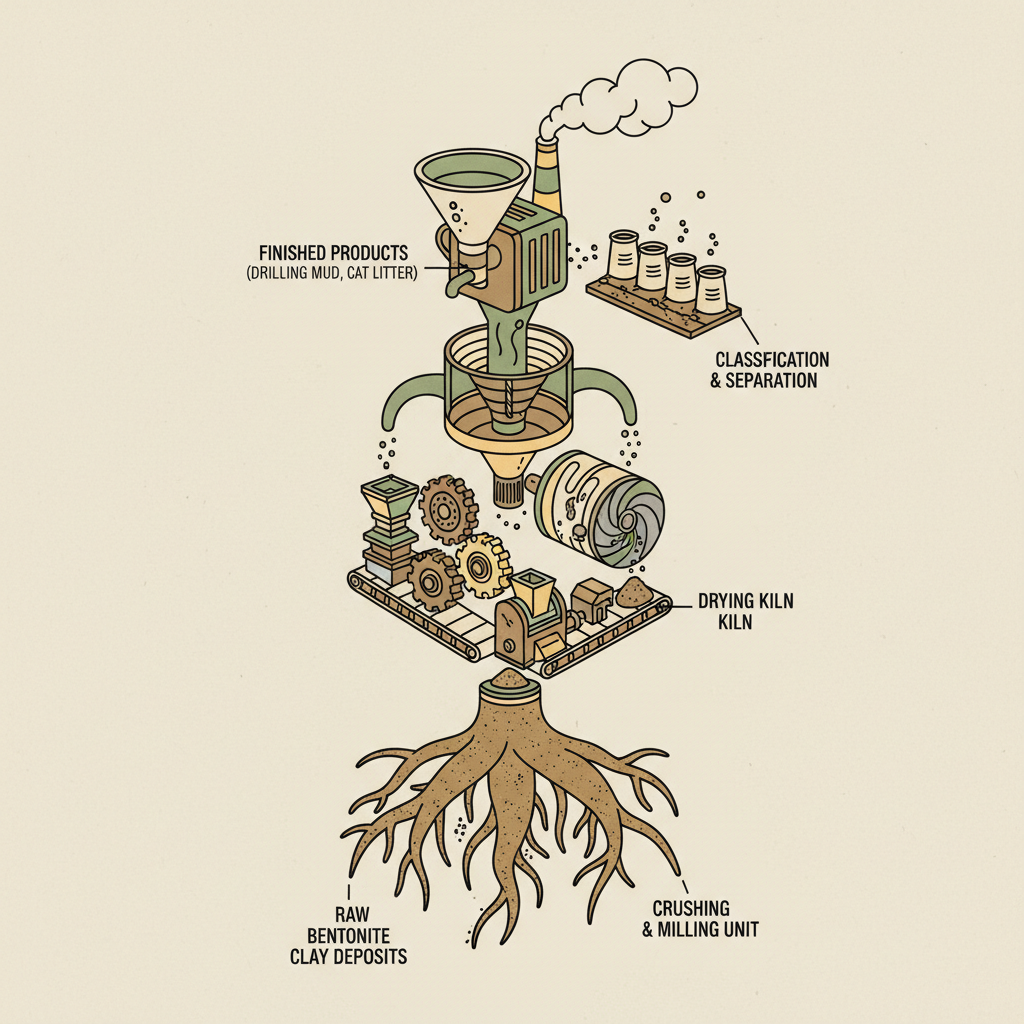
Calcium carbonate manufacturing is a globally significant industrial process with applications spanning numerous sectors, from construction and agriculture to pharmaceuticals and food production. Its prevalence stems from the abundant availability of limestone and chalk – the primary raw materials – and the relatively straightforward production methods. Understanding the nuances of calcium carbonate manufacturing is crucial for optimizing processes, ensuring product quality, and navigating the evolving demands of a modern, sustainability-conscious world.
The increasing demand for calcium carbonate across diverse industries drives constant innovation in manufacturing techniques. Improvements in grinding, classification, and surface treatment technologies are leading to products with tailored properties for specific applications. Furthermore, a growing emphasis on environmental responsibility is pushing manufacturers to adopt more efficient and sustainable production processes, minimizing waste and reducing carbon footprints.
This detailed exploration will delve into the core aspects of calcium carbonate manufacturing, covering its definition, key factors influencing production, global applications, advantages, future trends, and associated challenges. We will provide insights into maximizing efficiency and sustainability within this essential industry, highlighting the potential for ongoing development and improvement.
Introduction to Calcium Carbonate Manufacturing
The process of calcium carbonate manufacturing fundamentally involves extracting, processing, and refining calcium carbonate (CaCO3) from natural sources like limestone, chalk, or marble. This versatile material exists in various crystalline forms, each offering unique properties suited to different applications. The production techniques employed heavily influence the final product’s purity, particle size distribution, and overall performance.
A key aspect of modern calcium carbonate manufacturing is the emphasis on controlling these parameters to meet the stringent requirements of various industries. This includes optimizing grinding processes, employing sophisticated classification techniques, and implementing surface modification strategies. These advancements allow manufacturers to tailor calcium carbonate's characteristics to enhance its functionality in specific end-use applications, like plastics, paints, or paper.
Global Relevance and Industry Context
Calcium carbonate is one of the most widely used industrial minerals globally, with an estimated annual production exceeding 300 million tonnes. According to data from the United States Geological Survey (USGS), the construction sector remains the largest consumer, utilizing calcium carbonate in cement, concrete, and asphalt. However, demand is rapidly growing in other sectors like plastics, paper, and pharmaceuticals, driving expansion in manufacturing capacity worldwide.
The Asia-Pacific region dominates calcium carbonate production, accounting for over 70% of global output, driven by rapid industrialization in countries like China and India. North America and Europe represent significant markets with established manufacturing infrastructure, but are experiencing slower growth rates. A major challenge facing the industry is the need to reduce the environmental impact of quarrying and processing calcium carbonate, prompting investments in cleaner production technologies.
The quality and purity standards demanded by industries such as pharmaceuticals and food necessitate increasingly sophisticated manufacturing processes, creating a need for specialized calcium carbonate products with precisely controlled properties. calcium carbonate manufacturing companies are now focused on delivering tailored solutions to address these specific application requirements.
Defining Calcium Carbonate Manufacturing
Calcium carbonate manufacturing encompasses the entire process of transforming naturally occurring calcium carbonate sources—primarily limestone, chalk, and marble—into usable products. This involves extraction through quarrying or mining, followed by crushing, grinding, and classification to achieve the desired particle size and distribution. Often, further processing such as washing, bleaching, and surface treatment is applied to enhance product performance.
The connection to modern industry is profound. Calcium carbonate acts as a vital filler, extender, or pigment in a vast array of products. In plastics, it improves impact strength and reduces cost. In paper, it enhances brightness and opacity. And in pharmaceuticals, it serves as an antacid and calcium supplement. This broad utility underscores its importance to global manufacturing supply chains.
Furthermore, calcium carbonate manufacturing plays a role in addressing humanitarian needs, particularly in water purification. Ground calcium carbonate is employed as a pH adjuster and a coagulant, aiding in the removal of impurities and making water safer for consumption. calcium carbonate manufacturing is therefore essential not only for economic development but also for public health and well-being.
Key Factors in Calcium Carbonate Production
The purity of the raw material is a critical factor, directly impacting the quality of the final product. Limestone with minimal impurities yields a whiter, more versatile calcium carbonate. Particle size distribution is equally important; tailored particle sizes are required for different applications. Finer particles are often preferred for paints and plastics, while coarser grades are suitable for construction materials.
Grinding technology dramatically influences both particle size and energy consumption. Ball mills, vertical roller mills, and high-pressure grinding rolls are commonly used, each offering different advantages in terms of efficiency and product characteristics. Surface treatment – coating the calcium carbonate particles with organic compounds – enhances compatibility with polymers and improves dispersion in various matrices. These factors directly correlate to product performance and production costs.
Calcium Carbonate Manufacturing Method Comparison
Global Applications and Use Cases
The applications of calcium carbonate are remarkably diverse. In the construction industry, it's a core component of cement and concrete, providing strength and durability. The paper industry utilizes it as a filler to enhance brightness and opacity, reducing reliance on wood pulp. Plastics manufacturers incorporate it to improve impact resistance and reduce production costs, making products more affordable.
In pharmaceuticals, calcium carbonate serves as a vital ingredient in antacids and calcium supplements, addressing dietary deficiencies and digestive health concerns. The food industry employs it as a food additive, acting as a colorant, a stabilizer, and a source of calcium. Regions like China and India are major consumers due to their large manufacturing sectors and growing populations.
For example, in remote industrial zones lacking access to sophisticated water treatment facilities, ground calcium carbonate is used to purify water supplies, ensuring a safe and reliable source for local communities. Similarly, in post-disaster relief operations, it can be deployed for rapid water clarification, providing immediate aid to affected populations. calcium carbonate manufacturing products play a subtle but critical role in these scenarios.
Advantages and Long-Term Value
One of the primary advantages of calcium carbonate is its cost-effectiveness. Its abundance and relatively simple manufacturing process contribute to lower production costs compared to alternative materials. Sustainability is another key benefit, particularly when sourced responsibly and processed with energy-efficient technologies. Calcium carbonate is naturally occurring and non-toxic, minimizing environmental impact.
From a social impact perspective, calcium carbonate plays a role in improving public health through its use in water purification and dietary supplements. Reliability is also a major advantage; it's a stable and consistent material, ensuring predictable performance in various applications. This reliability builds trust among manufacturers and end-users alike.
Future Trends and Innovations
The future of calcium carbonate manufacturing is being shaped by a growing emphasis on sustainability and technological advancement. The development of bio-based coatings for surface treatment is gaining traction, reducing reliance on petrochemicals. Digitalization and automation are optimizing production processes, improving efficiency and reducing waste. The integration of AI-powered quality control systems promises to enhance product consistency.
Furthermore, research into nano-calcium carbonate is opening up new possibilities for advanced applications in areas like nanocomposites and drug delivery systems. The exploration of carbon capture technologies in conjunction with calcium carbonate production could provide a pathway to reduce greenhouse gas emissions and create a more circular economy. calcium carbonate manufacturing companies that embrace these innovations will be best positioned to thrive in the evolving market.
Challenges and Solutions
A significant challenge in calcium carbonate manufacturing is the environmental impact of quarrying operations, including habitat destruction and dust pollution. Implementing responsible quarrying practices, such as land reclamation and dust suppression technologies, are crucial steps toward mitigation. Another challenge is the energy intensity of grinding processes.
Optimizing grinding parameters, employing more efficient grinding equipment (e.g., high-pressure grinding rolls), and integrating renewable energy sources can significantly reduce energy consumption. Furthermore, exploring alternative calcium carbonate sources, such as recycled concrete or industrial byproducts, can lessen the dependence on virgin raw materials.
The following table summarizes key challenges and potential solutions related to calcium carbonate manufacturing:
Challenges and Solutions in Calcium Carbonate Manufacturing
| Challenge |
Environmental Impact |
Economic Consideration |
Proposed Solution |
| Quarrying Land Disturbance |
Habitat loss, erosion |
Land reclamation costs |
Land reclamation plans, biodiversity offsets |
| Dust Pollution |
Air quality degradation, health risks |
Compliance costs for air quality standards |
Dust suppression systems, enclosed processing |
| Energy Intensive Grinding |
High carbon footprint |
Elevated energy costs |
Optimized grinding parameters, efficient equipment |
| Water Usage |
Water scarcity, wastewater discharge |
Water treatment and disposal costs |
Water recycling systems, closed-loop processing |
| Waste Generation |
Landfill space, potential contamination |
Waste disposal fees |
Byproduct utilization, circular economy approaches |
| Supply Chain Disruptions |
Delayed production |
Increased costs |
Diversified sourcing, strategic partnerships |
FAQS
Ground Calcium Carbonate (GCC) is produced by mechanically grinding naturally occurring limestone or chalk. It typically exhibits a more irregular particle shape and wider particle size distribution. Precipitated Calcium Carbonate (PCC), conversely, is synthesized through a chemical process, allowing for precise control over particle size, shape, and purity. PCC generally commands a higher price due to its tailored properties and consistent quality, making it preferred for specialized applications like plastics and pharmaceuticals.
Particle size significantly affects paint properties. Finer particles (typically
Sustainability efforts include reducing energy consumption through optimized grinding processes and renewable energy integration, minimizing water usage via recycling systems, utilizing byproduct materials to reduce waste, and implementing responsible quarrying practices focused on land reclamation and biodiversity conservation. Some companies are also exploring carbon capture technologies to mitigate CO2 emissions during production.
Surface treatment involves coating calcium carbonate particles with organic compounds like stearic acid or silanes. This enhances compatibility with polymers, improves dispersion in various matrices, and reduces moisture absorption. It also improves the overall performance of the final product by enhancing properties like impact strength, tensile strength, and processability.
Essential quality control measures include monitoring particle size distribution, whiteness, brightness, moisture content, and chemical purity. Regular testing using techniques like X-ray diffraction, scanning electron microscopy, and chemical analysis ensures consistent product quality. Implementing Statistical Process Control (SPC) helps identify and address variations in the production process.
The lifespan of calcium carbonate in concrete is largely determined by the overall concrete mix design and environmental exposure conditions. However, calcium carbonate is a highly stable material and can contribute to the long-term durability of concrete structures. Well-designed concrete containing calcium carbonate can easily last for 50-100 years, and even longer with proper maintenance and protection against aggressive environmental factors.
Conclusion
Calcium carbonate manufacturing stands as a cornerstone of modern industry, providing an essential material for a remarkably diverse range of applications. From construction and agriculture to pharmaceuticals and environmental remediation, its versatility and cost-effectiveness make it indispensable. The ongoing pursuit of sustainable production methods, coupled with technological advancements in processing and surface treatment, is shaping the future of this crucial sector.
Looking ahead, continued innovation in areas like nano-calcium carbonate and carbon capture technologies promises to unlock even greater potential for this material. Manufacturers who prioritize sustainability, quality control, and adaptation to evolving market demands will be best positioned to thrive in the years to come. For more information on our calcium carbonate products and manufacturing capabilities, visit our website: www.jirunhuabang.com.