To be honest, things are moving fast in the construction materials world. Everyone’s talking about sustainability now, which is good, but it often means more expensive upfront. It’s a tricky balance, right? I’ve been seeing a lot of interest in geopolymer concrete—basically concrete made without Portland cement. Sounds great in theory, cuts down on carbon, but getting the workability right… well, let’s just say I spent a week last month troubleshooting a batch that wouldn’t pour for the life of it. And everyone’s trying to automate everything. Pre-fabricated modules, robotic bricklayers… it’s all coming. But you quickly learn that reality on a site is never as neat as a factory floor.
One thing I’ve noticed is how many designers get hung up on tiny details that don't matter in the real world. Like specifying a perfectly smooth finish on a surface that’s going to be covered in scaffolding for six months. Or insisting on a specific shade of grey that no one will ever actually notice once it’s all said and done. I encountered this at a factory in Nanjing last time, the owner was obsessed with tolerances within a millimeter. A millimeter! On a project where the foundation was off by a foot. It’s maddening.
We work a lot with bentonite powder, naturally. It's surprisingly versatile. People think of it just for slurry walls, which is a big chunk of what we do, but it's in so much more. Grouting, sealing, even as a binder in some eco-friendly plasters. It smells…earthy, which is nice, actually. Not like some of the other chemical things we handle. Feels powdery, obviously, gets everywhere, but that’s construction for you. You learn to live with the dust. Anyway, I think the crucial aspect is understanding its swelling properties. You need to anticipate how much it'll expand when it hydrates, or you'll end up with a mess – seriously.
Industry Trends and Design Pitfalls
Strangely, one trend I’m seeing is a resurgence of older techniques, but with a modern twist. Like rammed earth construction, but with a bentonite stabilization layer. It’s like people are realizing that sometimes the old ways were good for a reason. But the problem is always the consistency of materials. You can't just grab any old dirt and expect it to work. It has to be properly graded, the bentonite has to be mixed properly… It's a lot more science than people think.
And don't even get me started on the BIM models. They look beautiful, everything fits perfectly in the digital world, but then you get on site and… reality. The pipes are always in the wrong place, the beams are slightly warped, someone’s already built a temporary storage shed where the crane needs to go. It’s always something.
Bentonite: A Material Deep Dive
We source bentonite from different regions – Wyoming, Turkey, even China. The Wyoming stuff is generally higher quality, more consistent, but it's pricier. The Turkish bentonite is good value, but you have to be careful about the sodium content. Too much and it’ll cause problems with swelling and shrinkage. The Chinese stuff... well, it varies wildly. You really have to vet your suppliers. You can tell the quality by the color, actually. A good bentonite powder will be a creamy white or light tan. Anything too dark or reddish is usually a sign of impurities.
What’s fascinating is how much the particle size distribution matters. A finer powder will give you better sealing properties, but it can also be harder to disperse in water. It's all about finding the right balance for the specific application. And the moisture content! If it’s absorbed too much humidity, it'll clump up and become impossible to work with.
The whole thing relies on the clay minerals – primarily montmorillonite. That’s the stuff that gives it its swelling properties. It’s a complex structure, layers of silica and alumina sheets. Water gets in between those layers, causing them to expand. It’s pretty neat, when you think about it.
Testing Bentonite – The Real-World Approach
Lab tests are fine, but they don't tell you the whole story. We do a lot of field testing. Slurry density tests, of course. Viscosity measurements. But the real test is how it performs in the actual application. We'll dig a small test pit, mix up a batch of bentonite slurry, and see how well it seals. How quickly it sets. How easily it’s pumped.
I remember one time we were working on a tunnel project in Guangzhou, and the bentonite we were using just wouldn’t set properly. The lab tests were all passing, but on-site, it was like trying to build a wall out of water. Turns out there was something in the groundwater reacting with the bentonite, inhibiting the hydration process. Had to fly in a different grade from Wyoming. Cost a fortune in expedited shipping.
We also check for contaminants. Heavy metals, organic compounds… you name it. You don’t want to be pumping something toxic into the ground. It's all about due diligence, really. Anyway, I think that's why we prefer to stick with suppliers we know and trust.
How Bentonite is Actually Used
People underestimate how versatile this stuff is. It's not just for big civil engineering projects. We’ve used it for everything from sealing ponds on farms to stabilizing landslides in residential areas. One time, a homeowner had a leaky basement. Instead of digging up the foundation, we injected a bentonite slurry around the perimeter. Fixed the problem in a day. Saved him a ton of money.
But the biggest use, by far, is in slurry walls. That’s where you dig a trench, fill it with bentonite slurry, and then build the wall inside the slurry. The slurry stabilizes the trench, prevents it from collapsing, and keeps the groundwater out. It's a lifesaver, frankly. Without it, a lot of these underground projects just wouldn't be possible.
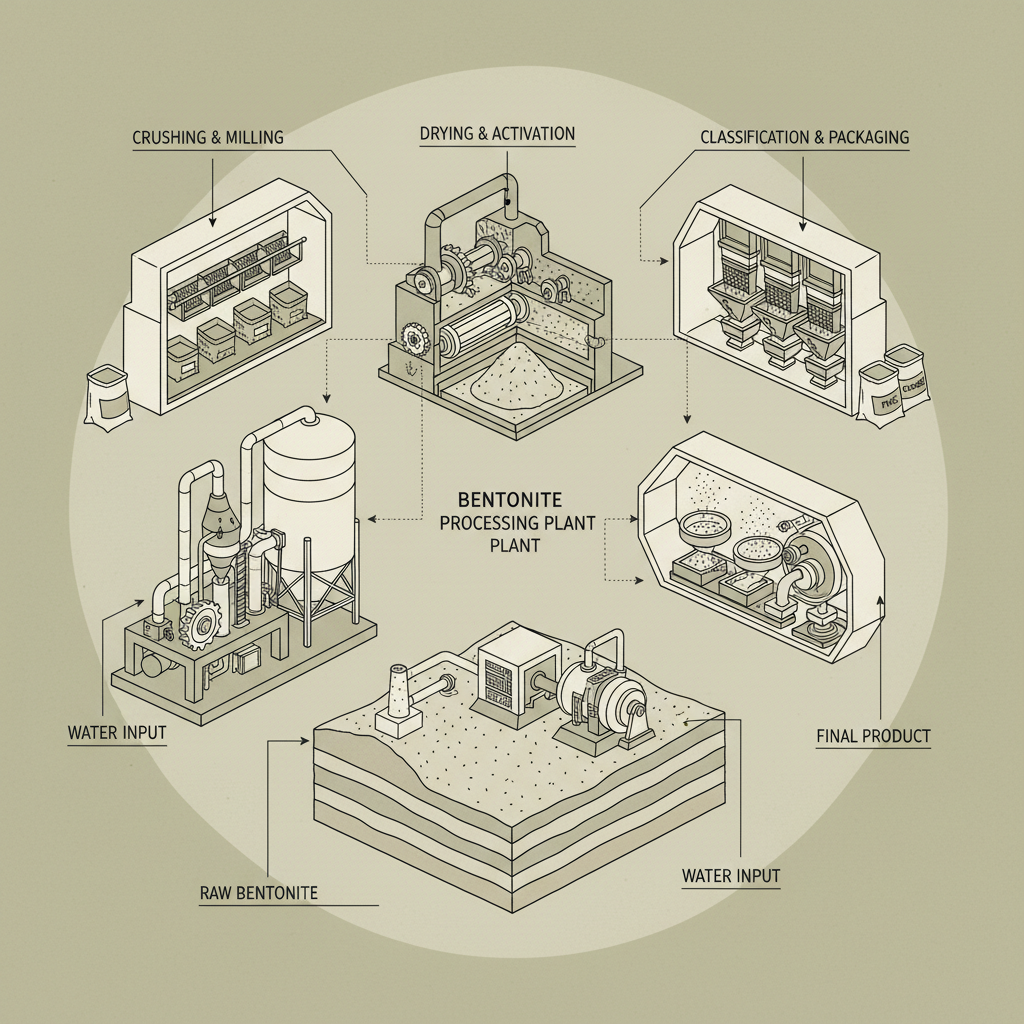
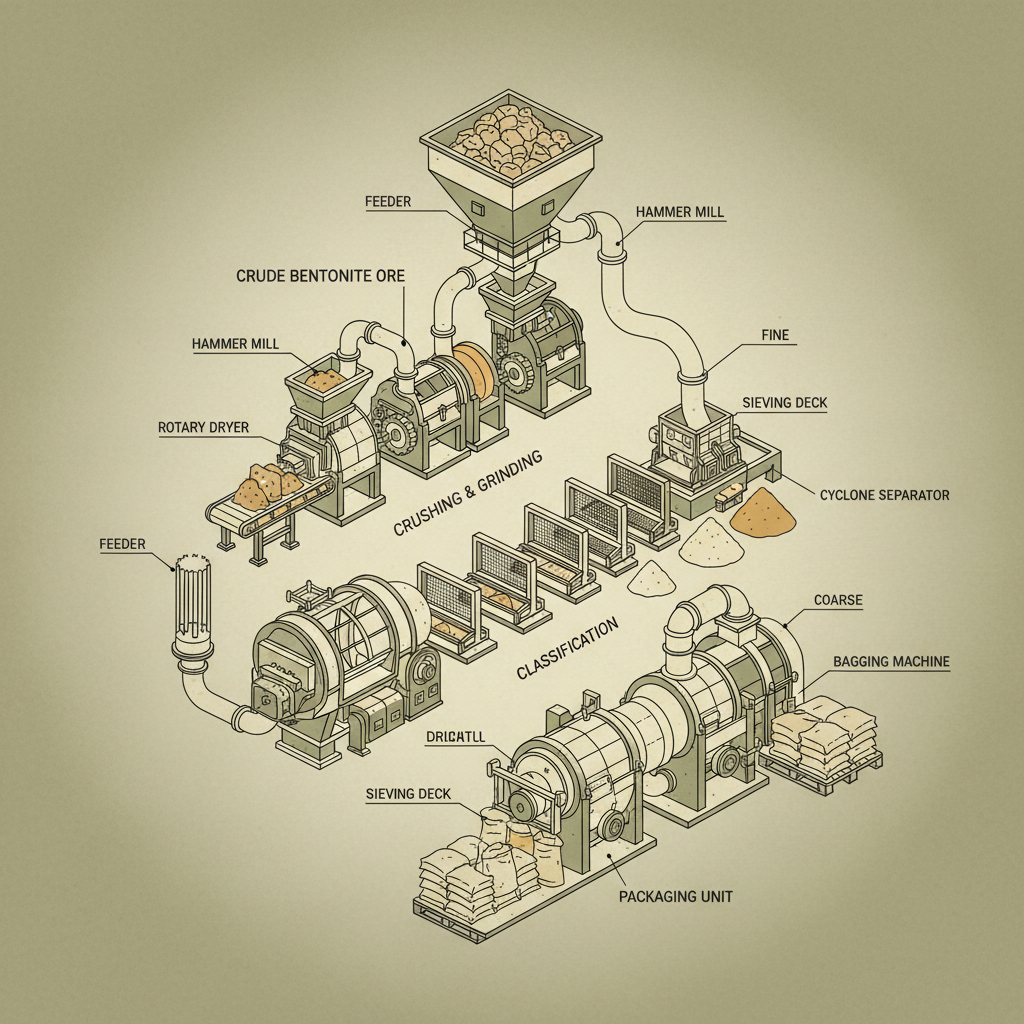
Bentonite Powder Manufacturer – Application Breakdown
Advantages, Disadvantages, and Customization
The biggest advantage of bentonite is its cost-effectiveness. It’s relatively cheap, readily available, and it gets the job done. It’s also environmentally friendly – it’s a natural material, biodegradable. But it has its downsides. It can be messy to work with, as we’ve already discussed. And it’s not suitable for all applications. If you need something that can withstand extreme temperatures or highly corrosive environments, bentonite probably isn’t the answer.
We do a lot of customization. We can blend different grades of bentonite to achieve specific properties. We can add polymers to improve its workability or its resistance to erosion. We even had a client who wanted us to dye it pink for an art installation. I’m not kidding.
A Customer Story from Shenzhen
Last month, that small boss in Shenzhen who makes smart home devices insisted on changing the interface to for a sealing compound we were supplying. He said it was “more modern.” More modern! For a sealing compound that’s going to be buried underground! I tried to explain to him that it didn’t matter, that the existing connector was perfectly functional and more readily available, but he wouldn’t listen. He just kept talking about “brand image.” Ended up delaying the project by two weeks while we sourced a custom connector. Waste of everyone’s time. And money.
You see it all the time. People get fixated on features that don’t actually add any value. They want the latest and greatest, even if it’s not the best solution for the job. It's frustrating, to say the least. But hey, it keeps things interesting.
Anyway, I think you have to be firm with clients sometimes. Explain the trade-offs. Help them understand what’s actually important. Because ultimately, they’re relying on your expertise.
Performance Characteristics and Specifications
So, looking at the basic performance metrics, it's a bit of a mixed bag, honestly. Depends on the source, the processing, everything. But here's a rough guideline, something I scribbled down during a site visit last year. Don’t quote me on these numbers – they’re just ballpark figures.
The key things people are interested in are swelling index, liquid limit, plastic limit, and yield value. Those tell you how much it expands, how easily it flows, and how much force it takes to deform it. It's all important for designing a stable slurry or grout.
Of course, there are standards – ASTM, ISO, all that jazz – but those are just guidelines. The real test is always how it performs in the field.
Summary of Key Bentonite Performance Indicators
| Swelling Index |
Liquid Limit (%) |
Yield Value (Pa) |
Sodium Content (%) |
| 25-40 |
30-60 |
50-200 |
0.5-2.0 |
| 40-55 |
50-70 |
150-300 |
1.0-3.0 |
| 15-30 |
20-50 |
20-100 |
0.2-1.5 |
| 30-45 |
40-60 |
80-250 |
0.8-2.5 |
| 45-60 |
60-80 |
200-400 |
1.5-3.5 |
| 20-35 |
35-55 |
60-180 |
0.3-1.8 |
FAQS
That’s a good question. Technically, bentonite doesn't “expire” like milk. But it can absorb moisture from the air over time, which can reduce its effectiveness. If it's stored properly – in a dry, sealed container – it should be good for at least a year, maybe even longer. But if it’s been sitting in a damp shed for six months, I wouldn’t trust it. Always check the consistency before you use it. It should be loose and powdery, not clumpy.
Generally, no. While bentonite itself isn’t necessarily toxic, it's not typically purified to a level suitable for drinking water. There’s a risk of contaminants, heavy metals, and other impurities. There are specialized bentonite products specifically processed for potable water applications, but those are different and come with certification. Don't just grab a bag of construction-grade bentonite and put it in your water filter.
That’s a core thing. Sodium bentonite swells more than calcium bentonite. This is because the sodium ions are smaller and allow water to penetrate the clay structure more easily. Sodium bentonite is better for sealing applications where you need maximum expansion. Calcium bentonite is more commonly used for binding and absorption. It's also generally cheaper. It really depends on what you're trying to achieve.
Relatively, yes. It's a natural material, biodegradable, and doesn’t release harmful toxins. However, mining bentonite does have environmental impacts – habitat destruction, dust pollution, that sort of thing. And transporting it around the world isn’t exactly carbon neutral. So, it’s not a perfect solution, but it’s a lot better than some of the alternatives.
That depends on a ton of factors: the depth of the trench, the permeability of the soil, the desired slurry density. There's no one-size-fits-all answer. You’ll need to do a site-specific analysis and consult with a geotechnical engineer. Don’t just guess. You’ll end up with a mess, and it’ll cost you more in the long run.
It's tricky. You can’t really “recycle” bentonite in the traditional sense. Once it’s been mixed with water and used in a slurry, it’s difficult to separate the clay from the other materials. However, in some cases, you can reuse excavated bentonite-rich soil for landscaping or other non-structural applications. It just needs to be properly tested to ensure it doesn’t contain any contaminants.
Conclusion
Ultimately, bentonite powder is a surprisingly versatile and valuable material in construction. It's not glamorous, and it can be messy to work with, but it gets the job done. From stabilizing excavations to sealing leaks to binding materials, it plays a crucial role in countless projects. We've gone over the trends, the pitfalls, the testing methods, and the real-world applications. And, it's the constant field testing and practical application of our learnings that separate us from the rest.
Look, fancy lab results and detailed specifications are all well and good, but at the end of the day, the worker will know whether it's working or not the moment he tightens the screw. That's the truth of it. If you're looking for a reliable bentonite powder manufacturer, with a team that understands the challenges of the job site, visit our website: www.jirunhuabang.com.