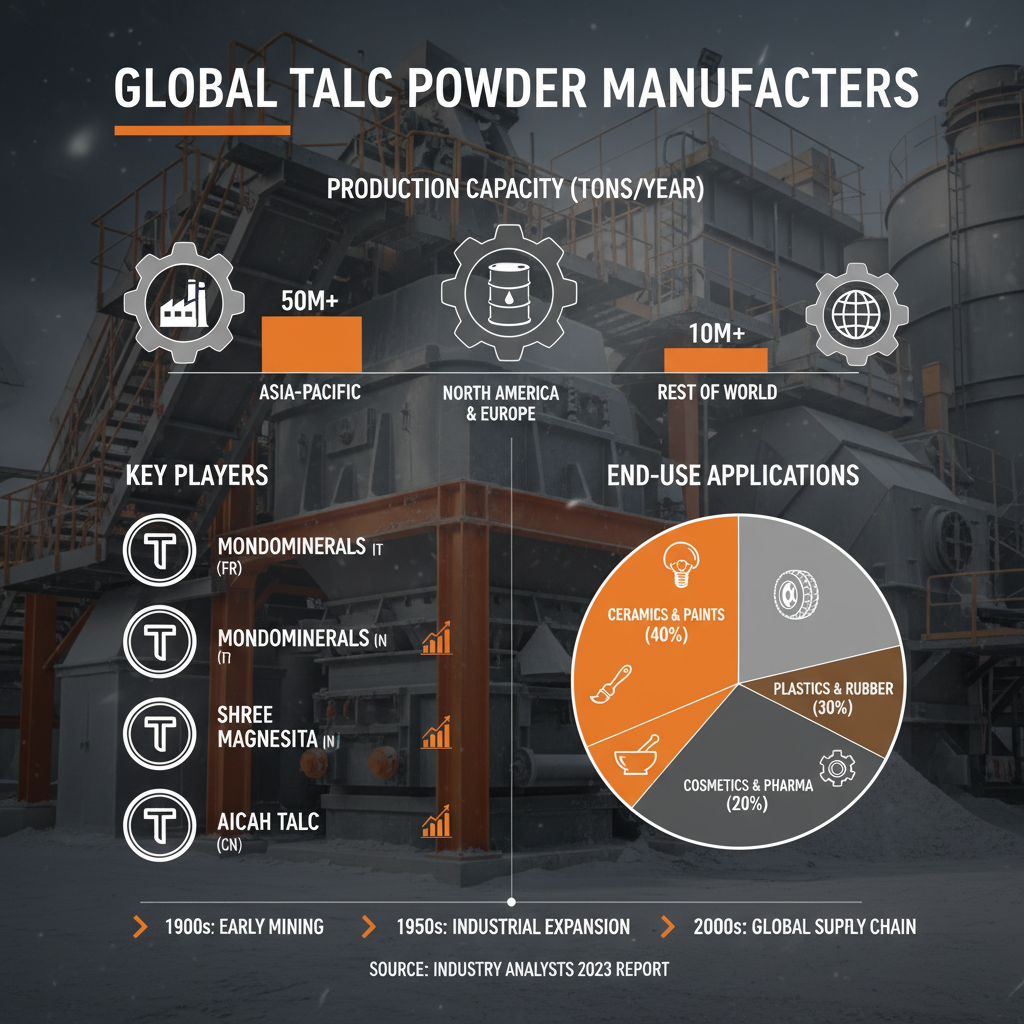
Talc powder manufacturers play a crucial role in a diverse range of industries, from cosmetics and pharmaceuticals to plastics and paints. These manufacturers are responsible for sourcing, processing, and distributing talc, a naturally occurring mineral composed of hydrated magnesium silicate. The global demand for talc is driven by its unique properties – softness, chemical inertness, and ability to absorb oil and moisture – making it an essential component in countless products used daily worldwide. Understanding the complexities of the talc powder manufacturing process, including quality control and responsible sourcing, is vital for businesses and consumers alike.
The industry faces increasing scrutiny regarding asbestos contamination, leading to stricter regulations and a growing emphasis on quality assurance. Reputable talc powder manufacturers are investing heavily in advanced testing methodologies and sustainable mining practices to address these concerns. The market is experiencing a shift towards higher-purity talc grades, driven by demands from the pharmaceutical and personal care sectors. This necessitates continuous innovation and adherence to international standards, like ISO certifications, for these companies to remain competitive.
The global talc powder market is projected to grow significantly in the coming years, fueled by economic development in emerging markets and expanding applications in new technologies. Manufacturers must adapt to evolving consumer preferences and prioritize ethical and environmentally friendly operations to sustain long-term success. The future of the industry relies on transparency, traceability, and a commitment to responsible mineral sourcing, differentiating leading talc powder manufacturers from their competitors.
The Importance of Talc Powder Manufacturers
Effective talc powder manufacturers are vital to numerous supply chains. Their ability to consistently deliver high-quality talc, meeting stringent purity and particle size requirements, directly impacts the performance and safety of final products. This spans across industries like cosmetics, where talc provides a silky texture, to pharmaceuticals, where it acts as a lubricant and excipient. Without reliable manufacturers, these industries would face disruptions and potential compromises in product quality.
Furthermore, responsible talc powder manufacturers prioritize ethical sourcing and sustainable practices. This includes minimizing environmental impact through efficient mining techniques and rigorous quality control to prevent asbestos contamination. Their commitment to responsible operation builds trust with consumers and ensures the long-term viability of the industry.
Global Context and Industry Overview
The global talc market is a multi-billion dollar industry, with significant production concentrated in countries like China, India, Italy, and the United States. According to recent reports, the demand for talc is steadily increasing, driven by growth in the Asia-Pacific region, particularly in developing economies. The United Nations Comtrade database indicates a consistent rise in talc exports over the past decade, showcasing its continued importance in international trade.
However, the industry is currently facing significant challenges related to asbestos contamination and subsequent health concerns. This has led to increased regulatory oversight by organizations like the FDA and REACH, demanding more thorough testing and traceability measures. The ISO 9001 certification is becoming increasingly important for talc powder manufacturers aiming to demonstrate their commitment to quality and customer satisfaction.
One major problem is the lack of standardized testing methodologies for asbestos in talc. This inconsistency makes it difficult for manufacturers to guarantee the safety of their products and creates uncertainty for consumers. The industry needs to adopt uniform testing protocols and transparent reporting practices to restore confidence and ensure the long-term sustainability of the talc market.
Defining Talc Powder Manufacturers
Talc powder manufacturers are companies specialized in the mining, processing, and distribution of talc, a hydrated magnesium silicate mineral. Their operations encompass several key stages, beginning with the extraction of raw talc ore from natural deposits. The ore is then crushed, ground, and purified through various processes, including flotation, micronization, and classification, to achieve the desired particle size and purity levels.
These manufacturers cater to a wide range of industries by offering talc in various grades and specifications, tailored to specific applications. They employ sophisticated quality control measures to ensure that their products meet stringent industry standards and customer requirements. Many talc powder manufacturers also provide custom blending and packaging services to meet the unique needs of their clients.
The role of these manufacturers extends beyond simple production. They are increasingly responsible for ensuring the ethical and sustainable sourcing of talc, addressing concerns about environmental impact and worker safety. This includes implementing responsible mining practices and investing in technologies to minimize asbestos contamination.
Key Factors in Talc Powder Production
Several core aspects define the success and efficiency of talc powder manufacturers. Purity is paramount, as contaminants, particularly asbestos, can have serious health implications. Manufacturers must employ rigorous testing and purification processes to guarantee a consistently high-quality product. Particle size distribution is another critical factor, as it influences the texture, performance, and application of talc in various products.
Furthermore, consistency in chemical composition is essential, as variations can affect the final product's properties. Efficient production processes, including optimized grinding and classification techniques, are vital for minimizing costs and maximizing yield. Finally, responsible sourcing and adherence to environmental regulations are increasingly important considerations for both manufacturers and consumers.
Comparative Analysis of Talc Powder Manufacturing Methods
Applications Across Diverse Industries
The versatility of talc powder makes it indispensable across a wide spectrum of industries. In the cosmetics industry, talc powder manufacturers supply a key ingredient for products like baby powder, blush, eyeshadow, and foundation, prized for its ability to absorb moisture and provide a smooth texture. The pharmaceutical sector utilizes talc as a lubricant in tablet manufacturing and as a filler in capsules.
Beyond these, the plastics industry relies on talc as a reinforcing agent and filler, enhancing the strength, stiffness, and heat resistance of plastic components. The paint and coatings industry incorporates talc to improve opacity, adhesion, and durability. In paper manufacturing, it’s used to improve smoothness and printability. These diverse applications demonstrate the crucial role of these manufacturers in enabling various industries.
Advantages and Long-Term Value
Utilizing high-quality talc from reputable talc powder manufacturers offers several tangible benefits. Cost-effectiveness is a significant advantage, as talc is a relatively inexpensive mineral compared to alternative fillers or additives. Its chemical inertness ensures product stability and longevity, reducing the risk of degradation or reaction with other ingredients. Sustainability is also a key benefit, as talc is a naturally occurring resource.
Furthermore, the use of talc enhances product performance and safety, improving texture, adhesion, and durability in various applications. The emotional value lies in the consumer’s trust in the safety and quality of products containing talc, particularly in personal care items. The long-term value is solidified by the continued demand for talc across diverse industries.
Future Trends and Challenges
The future of talc powder manufacturers will be shaped by several emerging trends. A growing emphasis on sustainability will drive demand for responsibly sourced and environmentally friendly talc products. Digital transformation and automation will optimize production processes, enhancing efficiency and reducing costs. The development of advanced testing methodologies to detect and eliminate asbestos contamination will be crucial for restoring consumer confidence.
One significant challenge is the increasing regulatory scrutiny and potential restrictions on talc usage due to health concerns. Manufacturers must proactively address these concerns through investment in research and development, as well as transparent communication with stakeholders. Another challenge is competition from alternative mineral fillers. Companies must differentiate themselves through innovation, quality, and customer service.
Summary of Factors Influencing Talc Powder Manufacturer Success
| Regulatory Compliance |
Production Cost Efficiency |
Product Quality & Purity |
Supply Chain Sustainability |
| High (8/10) - Stringent regulations drive investment in compliance. |
Medium (6/10) - Competitive pressure demands cost optimization. |
Very High (9/10) - Paramount for sensitive applications. |
Increasing (7/10) - Growing consumer awareness. |
| Medium (6/10) - Periodic audits and certifications. |
High (8/10) - Scale economies and process improvements. |
Very High (9/10) - Critical for pharmaceutical grade talc. |
Medium (6/10) - Traceability and ethical sourcing. |
| Low (4/10) - Limited impact in less regulated sectors. |
Medium (6/10) - Moderate cost sensitivity. |
Medium (7/10) - Acceptable purity levels for industrial uses. |
Low (3/10) - Limited focus on environmental impact. |
| High (8/10) - FDA and REACH oversight. |
High (7/10) - Investment in automation. |
High (8/10) - Consistent batch-to-batch quality. |
High (8/10) - Circular economy principles. |
| Medium (5/10) - Adaptability to new standards. |
Medium (5/10) - Efficient logistics and distribution. |
Medium (6/10) - Customer-specific specifications. |
Medium (7/10) - Responsible mining practices. |
| Very High (9/10) - Potential for significant penalties. |
Low (4/10) - Focus on value-added services. |
High (7/10) - Meeting stringent application demands. |
High (9/10) - Reducing carbon footprint. |
FAQS
The primary concern is the potential for asbestos contamination in talc used in cosmetics. Asbestos is a known carcinogen, and even trace amounts can pose a health risk. Reputable talc powder manufacturers employ rigorous testing protocols to ensure their talc is asbestos-free, but concerns persist due to historical contamination issues and the difficulty of detecting very low levels of asbestos. This has led to increased scrutiny from regulatory bodies and consumer advocacy groups.
Manufacturers employ several methods to ensure asbestos-free talc, including sourcing from carefully selected mines with historically low asbestos content, rigorous testing using techniques like X-ray diffraction and electron microscopy, and implementing strict quality control measures throughout the production process. Independent third-party certification and auditing are also becoming increasingly common to provide assurance of product safety and compliance with regulatory standards.
Beyond cosmetics, talc powder is widely used in the plastics industry as a reinforcing agent and filler, improving strength and heat resistance. It's also used in the paper industry to enhance smoothness and printability, in paints and coatings to improve opacity and adhesion, and in the pharmaceutical industry as a lubricant and excipient in tablets. Furthermore, it finds applications in ceramics, rubber, and even food processing.
Key certifications to look for include ISO 9001 (quality management systems), ISO 14001 (environmental management systems), and potentially specific certifications related to asbestos testing and compliance with relevant regulations like those from the FDA or REACH. These certifications demonstrate a commitment to quality, sustainability, and regulatory compliance, ensuring a reliable and safe supply of talc powder.
The geological composition of talc deposits varies significantly by location, affecting the purity, particle size, and other properties of the resulting talc powder. Some regions are known for consistently producing higher-quality talc with lower levels of impurities. Responsible talc powder manufacturers prioritize sourcing from reputable mines with well-documented geological profiles and robust quality control measures.
Sustainable practices include responsible mining techniques to minimize environmental impact, water conservation efforts, efficient energy usage, and waste reduction programs. Increasingly, manufacturers are focusing on reclaiming and repurposing mining byproducts and implementing circular economy principles. Transparency in sourcing and ethical labor practices are also critical components of sustainable operations.
Conclusion
In conclusion, talc powder manufacturers are integral to numerous industries, supplying a versatile mineral with unique properties. While facing challenges related to asbestos contamination and regulatory scrutiny, the industry is evolving towards greater transparency, sustainability, and responsible sourcing. The ability to consistently deliver high-quality, safe, and ethically produced talc is crucial for maintaining consumer trust and ensuring the long-term viability of the market.
Looking ahead, innovation in testing methodologies, coupled with a commitment to environmental stewardship and social responsibility, will be key to unlocking the full potential of talc. Investing in research and development, embracing digital transformation, and fostering collaboration across the supply chain will be essential for navigating future challenges and capitalizing on emerging opportunities. Visit our website at www.jirunhuabang.com to learn more about our commitment to quality and sustainability.