Vermiculite Granules: A Comprehensive Guide to Properties, Production & Full-Spectrum Industrial Applications
Back to list
Vermiculite is a natural layered silicate mineral that has become an indispensable material in industrial manufacturing and daily applications, thanks to its unique physical and chemical properties. Its core value derives from the exceptional expansion effect achieved through high-temperature calcination, as well as the inherent performance advantages of unexpanded raw vermiculite ore. This guide provides a comprehensive analysis of vermiculite granules, covering their production process, core performance parameters, key properties, and diverse end-use applications across industries.
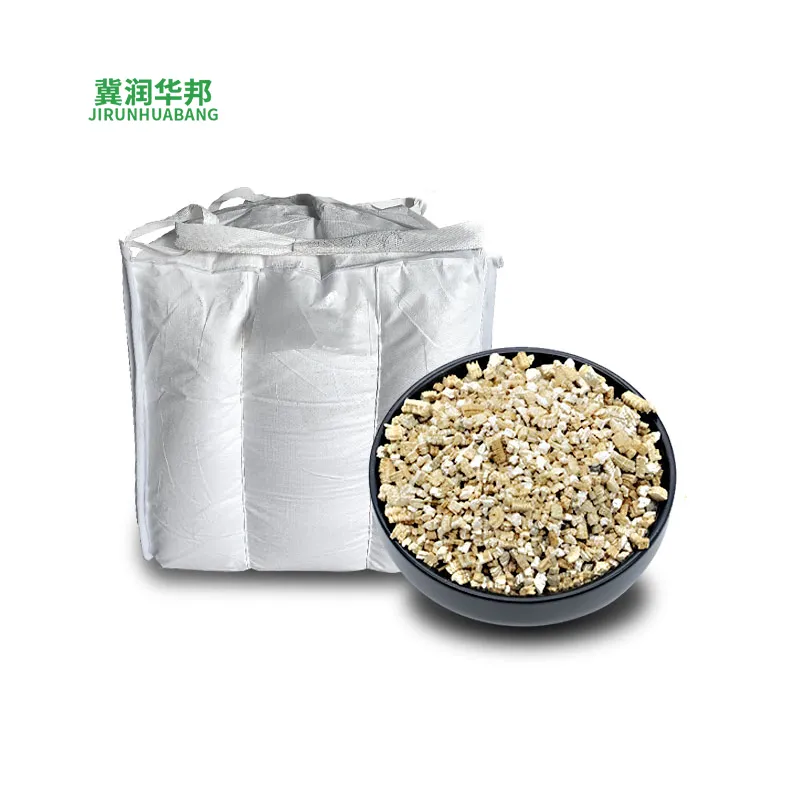
1. Production & Preparation Process of Vermiculite Granules
The production of vermiculite granules centers on the high-temperature roasting and expansion process, with strict quality control from raw ore purification to final finished product screening.
1.1 Raw Ore Purification & Classification
Natural vermiculite ore first undergoes systematic preliminary purification after mining: surface soil and associated impurities are removed through multi-stage screening, followed by the separation of high-purity vermiculite flakes via mechanical or manual sorting.
Based on appearance and mineral characteristics, raw vermiculite ore is mainly divided into two core categories: red flake vermiculite and silver flake vermiculite. While the two share similar chemical compositions, they differ in color, texture, and applicable scenarios: red flake vermiculite boasts a rich, deep hue, while silver flake vermiculite features a finer lamellar structure and higher expansion ratio. Both provide a stable raw material foundation for subsequent deep processing.
1.2 High-Temperature Expansion Process
When screened high-purity vermiculite is exposed to a high-temperature environment at roasting temperatures exceeding 800°C, the interlayer crystalline water within the vermiculite structure vaporizes instantaneously. This causes the lamellar structure to fully unfold, with the volume expanding rapidly by 6 to 10 times, forming lightweight, porous expanded vermiculite granules.
This expansion process is the core step that unlocks the functional properties of vermiculite. After expansion, vermiculite granules have a drastically reduced bulk density of only 60-180 kg/m³. It not only retains the inherent chemical stability of natural minerals, but also acquires a series of high-value functional properties that support its wide-ranging applications.
2. Core Performance Properties of Vermiculite Granules
The advantages of expanded vermiculite granules are concentrated in multiple core dimensions, which form the technical foundation for its adaptability to diverse industrial and daily application scenarios:
- Superior thermal insulation performance: Its interconnected porous structure can effectively block heat conduction and convection, with an extremely low thermal conductivity coefficient, making it a premium material for thermal insulation and heat preservation.
- Excellent electrical insulation performance: Its dense internal lamellar structure contains no conductive impurities, enabling it to be widely used in the manufacturing of insulating components and equipment to meet the insulation protection requirements of electrical and electronic devices.
- Outstanding sound absorption & insulation effect: The porous medium structure can effectively absorb sound wave energy and reduce noise transmission, making it a common core raw material for building sound insulation and noise reduction systems.
- Ultra-lightweight structural property: With a bulk density as low as 60-180 kg/m³, it can significantly reduce the dead load of building structures when used as a lightweight aggregate, while improving construction efficiency and reducing engineering costs.
- Exceptional fire & heat resistance: As a non-combustible inorganic mineral material with a melting point above 1300°C, it delivers excellent fire retardant and high-temperature resistance, widely used in fire protection engineering.
- Strong adsorption & cation exchange capacity: Its porous structure has excellent water and nutrient retention capabilities, along with outstanding adsorption performance for heavy metals and impurities, supporting its wide use in agriculture and environmental protection.
- Good chemical stability: Resistant to acid, alkali, and corrosion, with stable physical and chemical properties in harsh working environments, and a long service life without aging or degradation.
3. Versatile Applications Across Multiple Industries
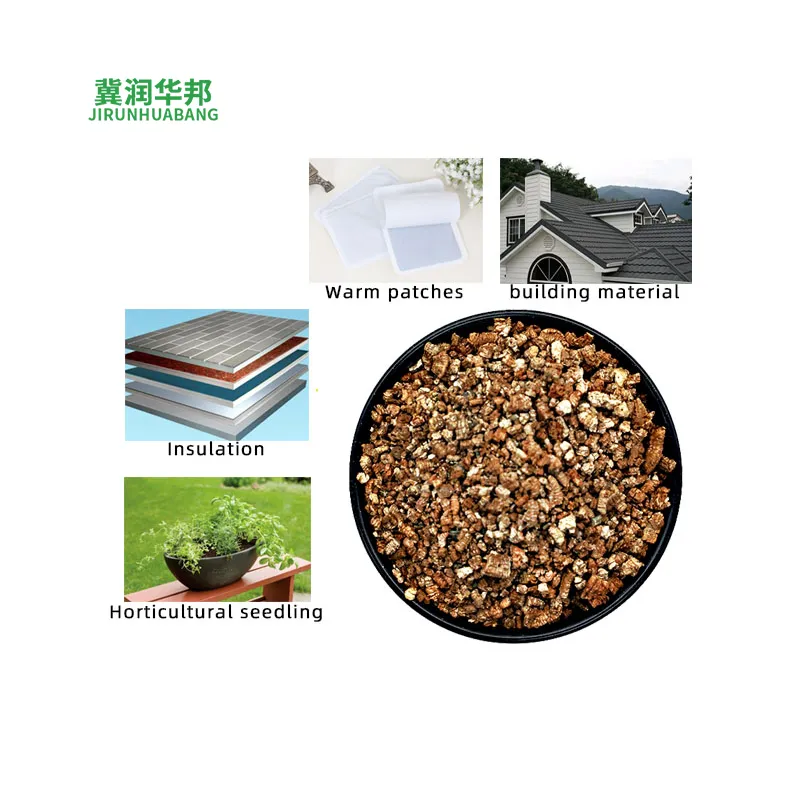
Leveraging the above core performance properties, vermiculite granules are widely used in dozens of fields including construction, metallurgy, petroleum, agriculture, and environmental protection, forming a diversified application system. Unexpanded raw ore and expanded granules each play unique roles in different scenarios based on their respective properties.
3.1 Construction & Building Materials Industry
Expanded vermiculite is a core functional material in this field, with mature and wide-ranging applications:
- It can be directly used as a lightweight aggregate in construction to produce lightweight concrete and lightweight mortar, reducing the self-weight of buildings while significantly enhancing their thermal insulation, heat preservation, and fire resistance performance.
- It is the core raw material for manufacturing thermal insulation, heat preservation, and sound insulation building materials, including wall insulation boards, roof insulation panels, and sound insulation bricks, widely used in energy-saving renovation and new construction projects of residential and commercial buildings.
Unexpanded raw vermiculite ore also has irreplaceable applications in building engineering:
- When mixed into fire-resistant coatings and thermal insulation mortars, it can significantly enhance the fire resistance limit and thermal insulation performance of building materials, with controllable costs, making it suitable for large-scale infrastructure and industrial construction projects.
- It can be processed into fireproof blocking bags, filled in cable wells and pipeline gaps. When exposed to fire, the material expands rapidly to block holes, effectively preventing the spread of fire and toxic smoke, and is widely used in fire protection engineering of industrial parks and high-rise buildings.
3.2 Industrial Manufacturing & Engineering
Vermiculite granules are an indispensable auxiliary material in industrial production, with different sub-sectors having clear requirements for their product specifications and application forms:
- Metallurgical industry: Steel mills use vermiculite in large quantities as a slag coagulant and molten steel purifying agent, usually selecting cost-effective vermiculite with 50% sand content, which can effectively adsorb impurities in molten steel and improve the purity of finished steel products.
- Petroleum industry: Utilizing its stable density, high temperature resistance, and excellent adsorption capacity, vermiculite is used as a weighting agent and high-temperature filtration control additive for drilling mud, to stabilize wellbores, prevent blowouts, and improve drilling safety and efficiency.
- Machinery & friction materials manufacturing: Vermiculite is used as a friction modifier and functional filler in brake pads, clutch plates, and other friction components, improving their heat resistance, wear resistance, and friction stability, thus extending the service life of braking and transmission systems.
- Thermal insulation engineering: Used as a filling material for industrial kilns, high-temperature pipelines, and thermal equipment, providing long-term stable thermal insulation and heat preservation effects, reducing energy loss in industrial production.
3.3 Agricultural & Horticultural Applications
Expanded vermiculite granules demonstrate outstanding ecological value in this field, and are a high-quality core raw material for ecological planting and modern agriculture:
- As a core component of seedling raising substrates, its porous structure balances excellent water retention and air permeability, providing a stable and suitable temperature and humidity environment for seed germination, and greatly improving the survival rate of seedlings and the consistency of seedling growth.
- In the preparation of horticultural nutrient soil and growing media, vermiculite can adjust soil pH value, enhance soil fertility retention and air permeability, loosen compacted soil, and promote the healthy growth of plant root systems, making it suitable for the cultivation of various crops including flowers, vegetables, fruit trees, and lawns.
- Vermiculite is rich in a variety of trace elements such as magnesium, iron, potassium, and calcium, which can be slowly released into the soil to provide long-term natural nutrients for plants, improving crop quality and yield.
- It is also widely used in soilless cultivation, hydroponics, plant transplanting, and microbial carrier applications, supporting the development of modern facility agriculture and ecological planting.
4. Market Value & Industry Development Outlook
From production technology to full-scenario applications, vermiculite granules realize full-chain value release from raw ore mining to industrial and civilian fields, by virtue of its core value increment characteristic of high-temperature expansion. Low-cost raw vermiculite ore meets the demand for large-scale industrial slag removal and basic building materials, while high-value-added expanded vermiculite granules are suitable for high-end thermal insulation, electrical insulation, precision horticulture, and other high-requirement scenarios.
With its core advantages of being natural, environmentally friendly, efficient, and low-cost, vermiculite has become an important raw material for global sustainable development under the background of the circular economy and low-carbon transition. As industrial technology continues to advance and global environmental protection and building energy efficiency requirements are continuously raised, the application scenarios of vermiculite will be further expanded. Its value in green building, ecological agriculture, high-end manufacturing, environmental protection governance, and other fields will be further explored and highlighted, bringing sustained growth momentum to the entire industry.