
What is Himalayan Salt? A Natural Ancient Mineral for Life & Industry
Back to list
Known as the pink crystal from ancient oceans, Himalayan salt is a natural rock salt formed from the crystallization of primordial seawater over hundreds of millions of years, protected deep underground. Its unique geological origin and rich mineral composition make it a distinctive material widely used in catering, wellness, construction, and crafts worldwide.
1. The Formation of Himalayan Salt: Hundreds of Millions of Years of Geological Evolution
Himalayan salt originates from the ancient Tethys Ocean that covered the Himalayan region about 280–300 million years ago.
- 1.Seawater evaporation: Primordial seawater with abundant minerals evaporated, leaving thick salt deposits.
- 2.Tectonic compression: As plates collided to form the Himalayas, these salt beds were buried 600 meters or deeper underground.
- 3.Mineralization: Under long-term high temperature and pressure, seawater salts combined with underground minerals to form crystalline rock salt—Himalayan salt.
Key formation conditions: Closed ancient sea basins, stable sedimentation, and long-term high-pressure mineralization. Today, authentic Himalayan salt is mainly mined in the Salt Range region of Punjab, Pakistan, represented by the Khewra Salt Mine—one of the oldest and largest salt mines in the world. These deposits are sealed from modern pollution, retaining exceptional purity.
2. Key Characteristics of Himalayan Salt: What Makes It Unique?
Himalayan salt’s distinctiveness comes from its ancient origin, mineral richness, and natural crystal structure, setting it apart from refined table salt and other salts.
- • Rich Mineral Content: Mainly sodium chloride, plus over 84 trace elementsincluding potassium, calcium, magnesium, iron, etc. Iron oxide gives it a signature pink to reddish hue.
- • Natural Purity: Untouched by modern industrial, marine microplastic, or chemical pollution; no bleaching, no coloring agents, no anti-caking agentsin minimal processing.
- • Unique Crystal Structure: Translucent crystalline texture with stable physical properties; emits soft light and releases negative ions when heated or used in lamps.
- • Mild Flavor: Salty taste with layered mineral notes, less sharp than refined salt, enhancing food flavor without overpowering it.
- • Low Processing: Physical procedures like crushing, sieving, and cleaning only—preserves natural composition.
3. Practical Applications: The Versatile Advantages of Himalayan Salt
Himalayan salt spans gourmet cooking, wellness, building materials, and crafts, valued for both function and aesthetics.
Gourmet & Food Industry – Premium Seasoning
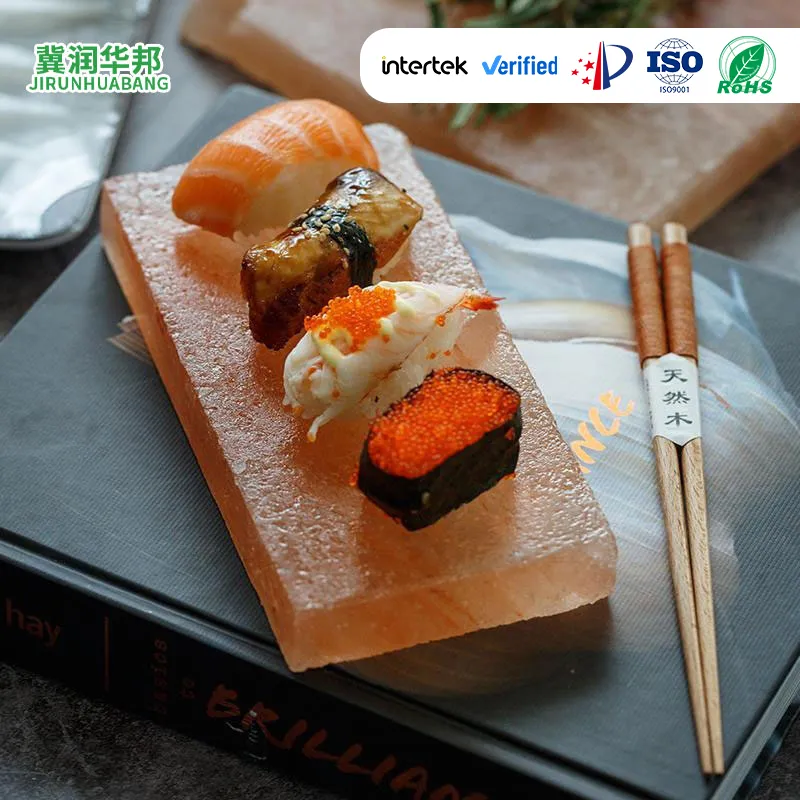
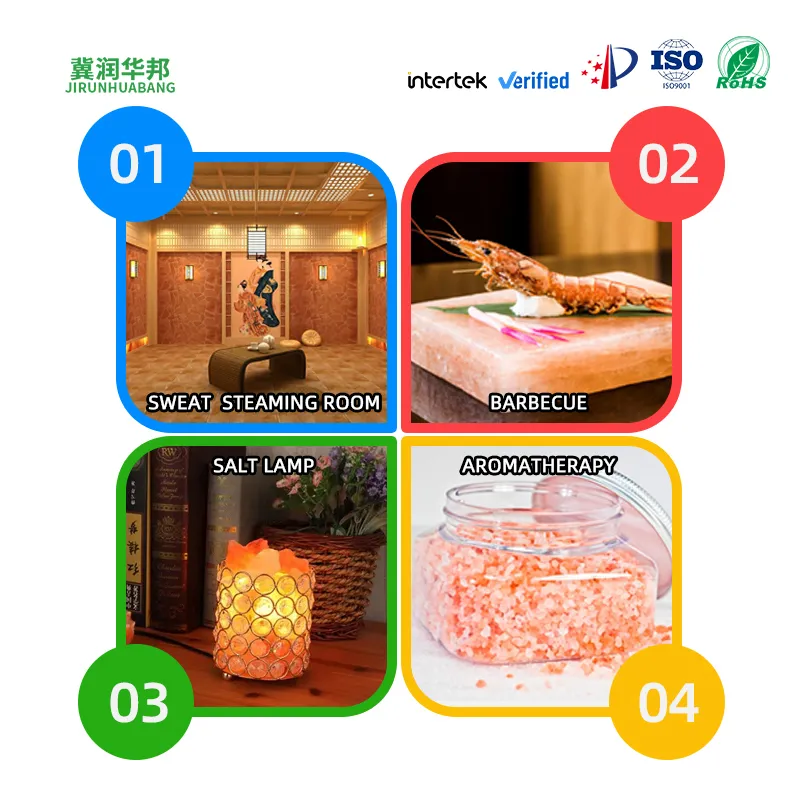
As a high-end natural seasoning, it elevates dishes with texture and flavor:• Cooking: For grilling, roasting, soups, and salads—releases gentle saltiness with mineral aroma.• Finishing: Coarse crystals as table salt for steaks, seafood, and vegetables, adding visual appeal and crunch.• Salt Blocks: Solid slabs for grilling, chilling, or serving, infusing food with subtle mineral notes.
Wellness & Personal Care
Its mineral profile and purity make it ideal for body care:• Bath Salts: Relaxes muscles, soothes skin, supports exfoliation and skin balance.• Inhalation: Salt steam helps ease nasal congestion and respiratory discomfort.• Spa Products: Used in scrubs, soaps, and foot soaks for gentle care.
Decoration & Wellness Crafts
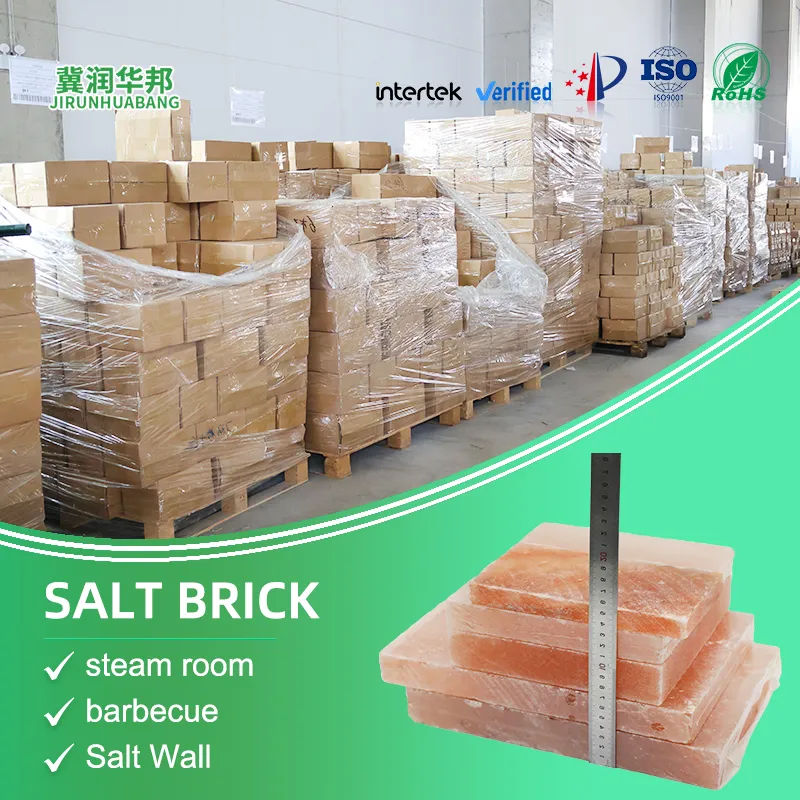
Unique color and light-transmission drive decorative uses:• Salt Lamps: Crystal blocks emit warm pink light, creating a calming ambiance.• Salt Bricks/Tiles: For salt rooms, saunas, and interior accents, combining aesthetics and wellness.
Building & Industrial Uses
Stable chemical and physical properties support industrial applications:• Construction: Salt bricks for heat-retention and decorative walls in spas and wellness centers.• Industrial: Raw material for chemicals, animal feed additives, and water treatment additives.• Crafts: Carved ornaments, candle holders, and giftware.
4. How to Select High-Quality Himalayan Salt
Quality varies greatly; focus on these criteria for authenticity and safety:
- Origin: Prefer mines in Pakistan’s Salt Range—core producing area for authentic Himalayan salt.
- Color & Texture: Natural translucent pink/red crystals; uniform particles, no dark impurities or stickiness.
- Mineral Composition: Clear labeling of NaCl and trace minerals; avoid products with unsubstantiated claims.
- Processing & Certifications: Minimal physical processing; ISO, food-safety, and heavy-metal testing compliant.
- Purpose Matching: Food-grade for cooking; industrial/craft-grade for lamps, bricks, etc.
Conclusion: Himalayan Salt – Nature’s Ancient Gift for Modern Life
With hundreds of millions of years of geological history, rich minerals, natural purity, and diverse uses, Himalayan salt is more than a seasoning—it is a multi-functional material integrating gourmet, wellness, decoration, and industry.
As a trusted supplier, we provide authentic, quality-controlled Himalayan salt products for cooking, wellness, construction, and crafts, meeting global safety and quality standards.